So you like the real estate stories, eh?
Enough with the stats blog posts, right? Storytime from now on?
As I wrote in the comments section last week, when a reader mentioned he “wanted nothing but real estate stories,” I try to put a little something on TRB for everybody. Some folks want stories from the trenches, others value instructional information, and then there are nerds who love the statistical breakdown every month, in addition to selected quarterly features.
But I hear you when it comes to the stories.
If told properly, they feel real to you, like you’re sitting there watching.
The problem with real estate television shows is that they’re entirely contrived. Trust me on this – there’s nothing about them that’s real. The “property buyer” shows are filmed after people have already bought, and I know this because I get casting calls all the time.
The problem is: nobody would ever make a show about what actually goes on in Toronto real estate. They couldn’t. It’s not fit for television.
Then again, the interactions that I have on a daily basis, many of which make it into stories here on TRB, wouldn’t exactly fill a half-hour show. But these stories explain how the market actually functions, and equally as important, how the participants function within it.
Today, I want to tell a story that ties into many of the real estate conversations that we’re having this year.
Pricing. Strategy. Seller expectations. Hot properties vs. cold properties. The market shift. One Realtor versus the next Realtor.
But before I begin the story, let me propose a hypothetical situation, and ask for your opinion…
Let’s say that there’s a condominium building in downtown Toronto.
Like many condos, let’s say that Unit #1501 is the same floor plan as Unit #1601, and so on, throughout the building.
Now, let’s say that, in this particular case, Unit #1501 is identical to Unit #1601, not just in terms of the square footage and layout, but also in terms of the finishes.
Unit #1501 is listed for $479,900 and has been on the market for 17 days.
Unit #1601 is listed for $599,900 and has been on the market for 34 days.
What’s up with this?
What are you missing? What’s the hidden agenda? What “gotcha” am I about to throw at you?
Nothing.
This is exactly what it seems at face value: two condo owners with completely different ideas about the market.
The owner of Unit #1601 might not be clinically insane, but he or she isn’t thinking clearly. There’s no reason, logic, or rational thinking here.
And this is happening everywhere in the GTA right now.
A few weeks ago, I sold a beautiful Toronto home for $1,800,000.
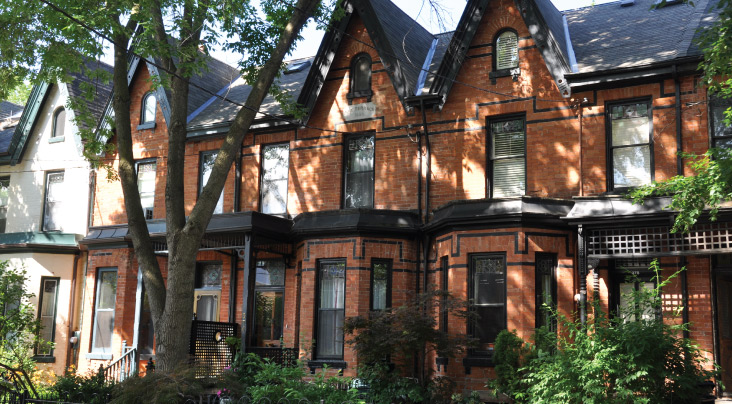
This was a red-brick, Edwardian-era home, circa 1908, fully renovated while maintaining the original character and charm.
For what it’s worth, my clients bought this house in 2022 for $1,658,000, so say what you want about the market, the decline, and the statistics therein, but not every house sells for less today than it did during peak times.
We didn’t just put a sign on the front lawn, however. We spent months preparing the house for sale, renovating and repairing, then packing, moving, and storing most of what was in the house. The house was staged, photographed, and marketed effectively, and we listed at a low price, set an offer date, and ended up with seven offers.
But this isn’t the story.
The story is about what happened one week later.
As is often the case when an agent has a successful sale, I received a phone call from somebody else on the street who wanted to know if I would meet with them.
I was happy to.
Upon receiving the seller’s address, I looked up the property and found that it had been listed in the fall of 2025 for $1,499,000 and then for $1,749,000.
This looked to me to be a classic case of listing the property low, with an offer date, and not selling, then re-listing higher.
Agents and sellers do this all the time.
But see if you notice a difference between these two descriptions:
1) Listing the property low, with an offer date, and not selling, then re-listing higher.
2) Listing the property low, with an offer date, and not selling, then re-listing at market value.
The problem in today’s market is that most sellers automatically equate #1 with #2.
But here’s the thing: “market value” is not what you want.
The old adage says, “A property is worth what somebody is willing to pay for it,” and yet all over the GTA, sellers are completely ignoring this economic concept.
I went to meet with the seller, and the first thing that I noticed was that his house was not pretty.
That might sound silly, and if you’re based outside of the central core of Toronto, then you might not understand the value of Victorian and Edwardian homes.
People pay huge premiums for this style of architecture, and while it’s not for everybody (nor are the imperfections with houses built between 1870 – 1920), the people who love it will pay accordingly.
The seller I was visiting had a house built in the 1980’s, but with that angel-stone that most people don’t like. I say “most people” because I don’t want to offend anybody who has this, but in truth, I’ve never met anybody who liked it.
The house didn’t have a front yard either; it was completely bricked.
In Toronto, this is extremely unpopular, and it compares quite poorly with a traditional grass lawn that features a mature tree.
I met the seller, and he showed me through his home. He was extremely pleasant, and the home was very well looked after and quite sparse.
He congratulated me on my recent sale up the street and said, “I’m hoping you can do that for me.”
Upon the conclusion of our tour, we sat down in the living room for a chat.
I asked him, “Can you tell me about your listing experience last fall?”
He was eager to share.
He said, “It was a very poor market, as you know,” and I already knew where this was going.
Many sellers refuse to believe that their house isn’t selling for the right reasons, and instead, will come up with any story to the contrary. In this case, the seller explained that last fall was not the “correct time” to list, and that is why the house didn’t sell.
I asked him, “When you listed the first time around, for $1,499,000, what was the strategy there?”
He said, “Bidding war.”
I smiled and said, “Bidding war……what? Exactly? What do you mean?”
He answered, “We went with the bidding war strategy.”
Again, I knew where this was going, but I wanted to flesh it out a little bit.
I offered, “So you priced the property low, well below fair market value, so that the buyer pool would believe the price to be attractive, and thus a bidding war would ensue.”
He said, “Bingo!”
But he also turned his right hand into a gun, pulled the imaginary trigger with his thumb, and even made the “click” sound when he shot.
So then I asked the rhetorical question that needed to be asked. And while this might make me sound condescending, you can’t fault me for it. Not fairly.
I asked him, “Did you get a bidding war?”
His demeanour changed.
He said, “No, obviously not.”
I asked, “But if the property was priced low, below fair market value, then how come you didn’t get a bidding war?”
He shrugged.
I’ve never liked the term “bidding war.” But even less than the term itself, I really dislike the way that it’s used colloquially to describe a “strategy.”
“We’re using the bidding war strategy,” a seller or agent might say.
But it’s not a strategy. It’s a term. You can’t implement a “strategy” based on a term that’s used to describe the most misunderstood or misquoted situation in real estate.
I asked him, “Did you get any offers?”
He sighed and said, “We did not.”
I continued, “So then you raised the price to $1,749,000?”
He explained, “Well, we did that because our bidding war strategy failed, and we couldn’t leave the property up for sale at a price that was artificially low, so we raised the price to market value.”
Our conversation was pleasant, don’t get me wrong. I don’t want to sound like I was interrogating this gentleman, but I am honest to a fault. I don’t waste time. I don’t tell people what they want to hear.
I asked him, “What did your previous agent think of the new price?”
He answered, “She was on board with whatever we decided,” to which I asked, “Do you think that’s a good thing?”
He furrowed his brow a little bit and said, “What do you mean?”
I said, “Did your agent do a market analysis for you? Did she talk to you about the response to the listing at $1,499,000, and what it would mean to increase the price to $1,749,000?”
He said, “Not really, but that’s because she knew what we wanted. She knew our price. She knew what our house was worth.”
Ah!
Do you see?
He was equating “what he wanted” with “what the house was worth,” but it was quite clear that these two things were not in synch.
I changed the subject a little bit and said, “So what is it that I can help you with?”
He explained, “Well, seeing as you sold the house up the street for $1,800,000, I figured you had multiple offers, correct?”
I told him that we had, in fact, received seven offers.
He continued, “So I figure, you can bring the second-highest bidder here, and they can buy my house.”
There were three problems here, which I explained in great detail.
“First of all, those buyers are other agents’ clients. They’re not my clients. I can’t ‘bring them’ here because I’m not working with them. Secondly, your house is completely different from that house. It’s night and day. And third, your house isn’t worth anything close to what that house sold for.”
I think those were my words, but maybe I was a bit softer?
In any event, he broke down my three points, one at a time.
He said, “Well, you could put me in touch with the agents who represent the other buyers,” to which I explained that this isn’t an accepted business practice.
He asked, “How is my house so different from that house?” to which I had the unfortunate task of actually explaining how that was a nice house and his was not. More on that in a moment.
Then, in terms of the price, he said, “You can’t tell me that house is worth more than mine! It was a four-bedroom; mine is a four-bedroom. It was a semi, mine is a semi. It had parking, mine has parking.”
I offered, “There are a lot of differences between your house and that house, but there’s one major difference.”
He asked what that was.
And in what can only be described as absolutely perfect timing, I held up my finger and quietly whispered, “That.”
That’s when the subway rolled through his basement!
Yes, this gentleman owned the first house on the block, north of the Bloor-Danforth subway line, and every four minutes, the whole damn house rattled!
Amazingly, he said, “Oh, what, that?”
I knew what he was going to say next, since I’d heard it before.
“You get used to it,” he said.
“We’ve been here for thirty years,” he told me. “It doesn’t bother us.”
I explained, “That may be true, but buyers will be here for twenty minutes, and they’ll make their decision based on that duration – when the subway rolls through five times.”
He levelled with me.
“Look, I’m not going to sell this house for less than $1,700,000.”
I explained, “You don’t have to.”
He said, “Can’t you do the bidding war strategy for this house like you did for the one up the street?”
I wanted to revisit something from earlier, so I asked, “Did you receive any offers on your house when it was listed?”
He confirmed that they did not.
I asked, “What is the market telling you, if you’ve priced ‘artificially low,’ as you say, at $1,499,000, but you receive zero offers?”
He laughed and said, “Well, buyers can’t see the forest through the trees, I guess.”
I asked, “What type of activity did you have when you re-listed for $1,749,000?”
He said, “Not very many, but I told you, the market last fall was abysmal.”
I was hoping that he would tie this all together by now, so I asked him, “Okay, you play real estate agent for a moment. What do you see here?”
He said, “I see a fantastic house that’s not getting the respect it deserves. There’s not a lot out there like this. This is a great family home, and houses like this don’t come along often. Look, we want to sell, but we don’t need to, and we’re not going to sell unless we get a fair price.”
He was hitting on a lot of points that sellers in his position make. All that was missing was, “This is a great city,” or “God isn’t making any more land.”
But he went back to that notion of “fair price.”
I asked him again, “What do you think is a fair price for this home?”
He said, “It’s $1.7 Million.”
I said, “But you told me that was what you wanted. Are you really telling me that’s what the house is worth?”
He took a big inhale, sighed, and then looked up at me.
“What do you think it’s worth?” he asked.
I had taken off my shoes at the front door, so I wasn’t prepared to run, but I offered my thoughts anyway.
“Maybe……….$1.4 Million?”
His reaction was exactly what you’d expect. I don’t even need to describe it.
But then I offered, “Maybe? I don’t know. Honestly, it could be less.”
He wasn’t happy.
I put it all together for him and said, “Listen, you listed last year for $1,499,000, and you received zero offers. That must tell you something about value. Then you raised the price by a quarter-million, and the property may as well not have been for sale.”
But that was merely the objective part. My subjective view had me explaining, “You’re comparing this house to the one up the street, but that house was special. It was sought after. Respectfully, these are two very different houses – I mean, that was a three-storey home, and we haven’t even explored that. But you’re ignoring the most important part: that your house is on top of the subway.”
He began to nod along, like perhaps he was absorbing what I was saying, so I finished by saying, “The truth is, a house on top of the subway is a tough sell in a hot market, but in the market we’re in right now, it’s impossible. The only reason somebody buys a house where the subway makes the dishes rattle every four minutes is that the price is too good to pass up.”
I added a final thought: “A house is worth what somebody is willing to pay for it. What you need or what has no bearing on value.”
He looked reflective and perhaps like he was in agreement.
He took a moment.
Then he said, “I know what my house is worth.”
And that was that.
It was hardly the first time I’ve experienced this situation, and you know it most certainly will not be the last.
But this is incredibly common in 2026 and explains why we’re seeing houses sit on the market for months on end, or more specifically, it explains why that house in your area that you know is overpriced was ever priced that way to begin with.
It’s why I’m hesitating to use the word “sellers” to describe these folks. They’re not. They’re “listers.” Their houses are merely listed for sale, but these people aren’t actually prospective sellers.
With March Break out of the way, I think inventory is about to spike.
If you’re a buyer, this might be what you’ve been waiting for.
If you’re a seller, it’s time to sharpen your pencil…