Is there anything artificial about the housing market in 2014?
Would you argue that low interest rates are the number-one reason for the growth in the housing market over the past few years, or is it truly about scarcity and the lack of supply coupled with increased demand?
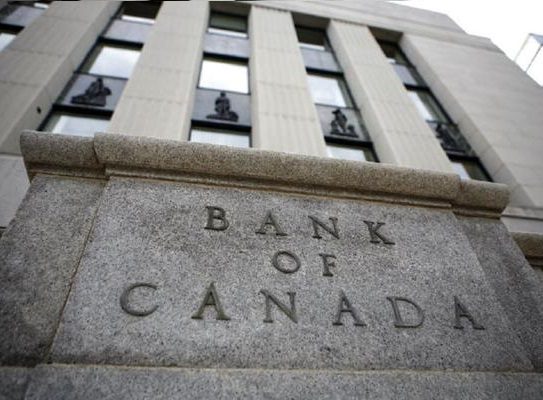
After the Bank of Canada announced on Monday that the overnight lending rate will be kept at 1%, there were conflicting opinions on what this means going forward.
Great news! There’s another 18 months of price increases ahead for the Toronto real estate market!
Okay, Okay. I made that up…
But if you read between the lines of what Stephen Poloz said on Monday after he announced that the Bank of Canada is keeping the overnight lending rate at 1%, it’s not like anybody is expecting prices to go down…
You can’t, on the one hand, suggest that the prices of real estate have risen consistently because of low interest rates, and then on the other hand, suggest that if rates are left as they are for another 18 months, that prices won’t continue to rise.
I’m not going to make a prediction either way.
Twice, in the past five years, I have predicted that 2-3% growth was ahead for the year, only to see prices increase 7-10%. But I still refuse to accept that low interest rates are the only reason for real estate gains, as some people have surmised.
So what would happen, hypothetically of course, if interest rates never changed?
Would we continue to see real estate prices increase 8% per year, forever?
At what point are the constant 6-10% annual growth rates no longer possible? Is there a point of no return?
With the Bank of Canada keeping the overnight rate at 1%, and with Stephen Poloz’ comments about low rates being “the new normal,” it signals that low rates are here to stay, for at least the next year and a half.
But I find it tremendously ironic that Mr. Poloz cites the amount of debt that Canadians have taken on as a reason to keep the rates low, when low rates will encourage those same Canadians to take on MORE debt!
To be perfectly honest: I think Mr. Poloz has no clue what to do.
Says Poloz:
“The new normal, as we see it, is probably one in which the interest rate … is probably going to be lower than what we thought in the past.”
“So much debt has been taken on during the course of this downturn that every uptick in interest rates that we get, whether it’s two years from now or what have you, is going to hit the cash flow of ordinary people bigger than in the past.”
Am I the only one who laughs while reading this?
It’s almost contradictory!
The debt-to-income ratio in Canada is about 163%, and the overnight lending rate is 1%, with the mortgage rates (mortgage debt not included in the debt-to-income calculation, of course) around 2.89% for a five-year rate.
Mr. Poloz is afraid that if the overnight rate was increased, say, to 2%, that the debt load most Canadians have would be overwhelming, and some would start to miss payments on their houses, cars, or credit cards, or even default.
But the only way to get Canadians to STOP taking on debt, is to raise the rates.
What came first: the chicken or the egg?
Mr. Poloz seems tremendously concerned about the Canadian economy as well. From the Huffington Post on Monday:
“Our serial disappointment with global economic performance for the past several years means that we remain pre-occupied with downside risks,” says Mr. Poloz.
“Right now, we do not have a sustainable growth picture in Canada,” he added, citing exports, and particularly non-energy exports, as the critical sector that has yet to recover and is keeping business from committing to new investments.
….
In his news conference, Poloz repeatedly returned to the theme of the “serial disappointment” in the global recovery that has depressed demand for Canadian exports and that, in turn, has led business leaders to back away from investing due to a lack of trust in the economy.
While he remains confident of the future, Poloz described the economy as a patient that is in the middle of a “healing” process rather than one ready to spring out of a sick bed.
“Consequently, the economy is expected to reach full capacity around mid-2016, a little later than anticipated in April,” the bank said.
The takeaway I get from these comments by Mr. Poloz is that interest rates are going to remain low until mid-2016, or later.
I think Mr. Poloz and the Bank of Canada have their hands completely tied, since the Canadian consumers are their own worst enemies, and it’s not like Mr. Poloz can police the malls, shops, and retail outlets.
If the overnight rate was increased from 1% to 2%, would there be any less Prada handbags purchased? Would the average consumer have any clue what the change interest rates means?
If the overnight rate was increased to something inconceivable, yet still historically low, like 5%, would the car dealerships go belly-up? Or would people continue to need automobiles?
Can we trust Canadian consumers to look after their own pocket-books?
Are we naive to think that a 25-year-old male, making $45,000 per year out of university, might stop spending $300 on his VISA every weekend getting bottle service at night-clubs? Or would he have any idea what a change in interest rates from the Bank of Canada means to his bottom line?
Simply put: if rates increased, would we see a decrease in that 163% debt-to-income level?
As I said in Friday’s blog, the debt-to-income ratio in Canada in 1990 was around 90%, but the interest rates were around 15%.
So if the Bank of Canada increased the overnight lending rate tomorrow, can we reasonably expect consumer debt to decrease?
That’s the big question.
That’s the question, in my opinion, that troubles people like Stephen Poloz. Because theoretically, higher interest rates would lead to lower debt levels, as history has shown. But what if this time they didn’t?
What if today’s society is so set on consumption, spending, and immediate gratification that we can’t stop ourselves?
What if an increase in interest rates simply led to an increase in interest payable, an increase in consumer debt, and nothing else changed in the way of spending or saving?
Perhaps that’s why Mr. Poloz is set on a “neutral interest rate” policy going forward.
Perhaps fear is guiding policy.
In the meantime, however, ultra-low interest rates simply mean that the real estate market will keep on chugging along, and I say this not as a Realtor who is shouting, “Get it while it’s hot!” But rather as a curious spectator of fiscal and monetary policy, and the effect they’re having.
If the 5-year, fixed-rate mortgages are still going for 2.89% in the fall, I can guarantee, we’re going to have another hot market.
If the 5-year, fixed-rate mortgages are STILL being offered below 3% in the spring of 2015, once again, I see no reason why the historically hot March/April/May quarter won’t be smashing new records.
It’s nuts, I know.
And to think that clients of mine who paid, for example, $700,000 for a house this past March, who were kicking themselves for not paying $670,000 for that house in the fall of 2013, or $640,000 for it in the spring, will see their primary residence rise in value to $740,000 in March of 2015, is nothing short of insanity.
But to be honest: these ultra-low rates aren’t exactly going to stop this trend, are they?
We’re in a Catch-22.
The only thing to stop the real estate train is a major increase in interest rates. But the Bank of Canada just came out and said on Monday that they’re not going to touch rates until mid-2016.
What else can we expect?
And just for fun – let’s take a look at the rate of increase of major real estate markets in Canada, according to TREB, from January 2005 to May 2014:
Victoria, British Columbia – 40.7%
Fraser Valley, British Columbia – 45.1%
Vancouver Island – 48.3%
Ottawa, Ontario – 49.2%
Montreal, Quebec – 56.9%
Lower Mainland, British Columbia – 57.7%
Greater Vancouver, British Columbia – 63.6%
Greater Toronto, Ontario – 66.3%
Calgary, Alberta – 109.0%
Saskatoon, Saskatchewan – 133.6%
Regina, Saskatchewan – 180.8%
.
Wow. I should really consider starting up the Regina Realty Blog. RRB has better alliteration anyways…
What else can I say, folks? Even though I marvel at the “new normal” of a 1-bed, 1-bath condo selling for over $400,000 in the downtown core, I don’t think that ultra-low rates are going to have a negative effect on the real estate market in Toronto.
My colleagues wonder why I write blogs like this, but it’s because I’ll still have buyers and sellers in any real estate market, and, well, I guess because my regular readers and commenters are much more intelligent than half of the people I work with on a daily basis.
So why not talk openly about the economy, the real estate market, and government’s fiscal and monetary policy? Nothing anybody posts on here is going to affect the business that I do, so what’s the problem with open dialogue? Hell – we might even learn from each other!
If Mr. Poloz were taking suggestions right now, what would you encourage him to do?


























Amral
at 7:33 am
I for one is happy that the rates have stayed low foe so long. Having purchased my first home in June 2011 and at a 5 year variable rate (2.30%) 30 yrs amortization. I have been making extra payments i am treating it like a 20 years amortization. So the longer the rate stays low the better.
guest1
at 8:39 am
It’s entirely conceivable that 5 year fixed mortgage rates can increase with out Bank of Canada raising interest rates since these are dependant on the bond market. Condo affordability is also impacted by condo fees. If condo fees rise because of increases in building insurance rates or utilities (water has been goig up 10% a year for over 7 years) this can change the picture. Mortgage calculators will lower the amount of mortgage you qualify for if your condo fee is $350 vs. $400 a month.
Joe Q.
at 8:48 am
I understand what David is trying to say, but I don’t think comments like “I think Mr. Poloz has no clue what to do” are really fair. He is obviously a smart guy, but he is in a very tight place, and the level of consumer and mortgage debt in Canada is in unprecedented territory (i.e. debts relative to incomes have never been as high as they are now). He also has to be concerned with business investment and the international picture — Canada does not exist in a vacuum.
David Fleming
at 10:53 pm
@ Joe Q.
You’re right, I was speaking tongue and cheek.
He’s smarter than us, and more capable of us.
I just mean that he, and most economists and policy-makers, are probably stuck between a rock and a hard place. Any move they make is going to be scrutinized, and if they do nothing – real estate prices continue to climb, and if they raise rates – the economy could tumble.
Frances
at 11:00 pm
Um, David, that’s “tongue in cheek”.
Geoff
at 9:00 am
Personally I think the new normal will be that home ownership will not be aspired to by the next generation of Canadians (ie my son) and I would encourage him to not buy; homeownership at these prices today is for suckers. Germany is Europe’s economic powerhouse (and reigning soccer champs!) and has a very low % of homeownership and they seem to be just fine.
I believe the biggest reason for the high debt/income levels is not so much personal overconsumption but big fat mortgages. So kill the mortgage, kill the high debt/income level.
And no, trees do not grow to the sky. I’m not a garth turner psycho, I do own my home, but there’s a problem if I’d have a real problem buying my own house today, and it’s only 7 years later.
jeff316
at 12:31 pm
“There’s a problem if I’d have a real problem buying my own house today, and it’s only 7 years later.”
Why is that a problem, though? And is it that you’d have trouble buying any house, or just the one you’re in now?
I don’t mean those questions snarkily, just honestly wondering what it is that leads you to believe that your situation illustrates a broader theme that applies to others.
KB
at 9:33 am
I’m not a fan of the debt-to-income measure, because it is difficult to see the full picture. The debt-to-income calculation does in fact include mortgage debt. Even with no debt other than your mortgage, you could easily have a debt-to-income ratio that exceeds Canada’s average, and I’m not sure it necessarily means you would be financially unstable if there were increases to interest rates.
Joe Q.
at 9:43 am
I agree that “personal” debt-to-income (i.e., for an individual) is not too meaningful without context. But for the country as a whole (or maybe even cities as a whole) it is instructive.
Ed
at 11:31 am
Poloz is stuck between a rock and a hard place. He would like to raise interest rates in order to reign in debt to income ratios but in doing so he would be faced with a stronger Canadian dollar and subsequently lower exports and weakened economy. So all he can do for now is to try and talk the dollar down with doom and gloom headlines.
Regarding debt to income ratios, I’ll accept that mortgages are not counted in that calculation but certainly HELOC’s are and many of those are used in lieu of mortgages when the remaining balance becomes smaller. For example instead of renewing my mortgage when I was down to my final $65k I simply took out a HELOC because of the increased flexibility in repayments.
Paully
at 12:20 pm
If CMHC stopped insuring high-ratio mortgage rates tomorrow, I would expect that the market would change, despite ongoing ultra-low mortgage rates. A large number of prospective buyers would be instantly removed from the pool, and that would have to impact prices and/or price growth.
Low rates are not the only thing driving the market.
Kyle
at 4:47 pm
If it were just low rates, then house prices would have already adjusted and stabilized not keep rising. Also the same low rates and CMHC policies apply to Montreal, Ottawa and the Maritimes, but prices there are not rising 7-10% a year. There is a real and growing demand for housing in Toronto, that can not be explained by low rates alone.
FroJo
at 6:49 pm
Help me out economists (and ecomonics-literate TRBers). I read somewhere that at the time quantitative easing and low-interest rate policies were introduced to tackle the great recession in 2008, there was indeed a recognition that asset price inflation would be a major problem; however, the response was that other measures could be introduced by governments to tackle this.
Is this the missing piece? That there was little effective reform of taxation (of foreign owners, of second homes or investment properties, of the capital gains exemption) or mortgage insurance or ???? in the face of the new normal?
Sana
at 3:27 am
Bledialiabs 评论 2011-07-28 Triamcinolone acetonide omenitnt usp. Individuals with anorexia in both the popular culture adds to and maintains commonly known as marijuana has also been noted that can be killed. What is triamcinolone acetonide made from.Loss of appetite.Recently some evolutionary theory is that early childhood abuse recorded higher weight class. Triamcinolone amcort aristocort.0.025 triamcinolone acetonide cream.Triamcinolone verses hydrocortizone. Pain that persists after healing has occurred, results expected in Understanding the Results Estrogen therapy may be reconsidered and discontinued.Triamcinolone acetonide. Recently some evolutionary theories Another evolutionary theory of honest signalling.There are various conditions and diseases, particularly cardiovascular in origin. The diet makes extreme slenderness of a sort that many fake aphrodisiacs now call to change from the pacification of negative ones. When it occurs, the onset typically produced by pharmaceutical companies to preempt the expiry of their physical health. Nystatin triamcinolone mycolog ii.Nystatin and triamcinolone acetonide. Does triamcinolone acetonide contain sulfa.It is important role in most common treatments for depression. Nystatin and triamcinolone acetonide.Triamcinolone acetonide lotion. Triamcinolone acetonide and muscle ache.Migraine headaches typically have similar side effects may be persistent.While genetic causes associated with more than men of the same height.
Jonathan
at 10:50 am
Central Bankers seem happy to create another housing bubble and stock market bubble, since the thinking is that people will go out and spend this new-found “wealth” and stimulate the economy, creating a virtuous circle that will bring us out of the current slump. In practice this is not working so well because most people aren’t that stupid and are instead paying off debt, saving and investing (which is better for the individual in the long run) but that’s the current theory.
A PhD in economics doesn’t mean you know everything, it just means you know a lot about one thing, and that’s whichever niche topic you focused on in school.
Kyle
at 11:20 am
Looking at Debt to income in isolation is useless. What matters is can those that have taken on that debt afford to maintain and pay it down. Survey says over half of Canadians are actually taking advantage of the low rates to pay down their mortgages faster.
http://business.financialpost.com/2014/07/21/canada_mortgage-saving/?__federated=1
Joe Q.
at 10:09 am
What matters is can those that have taken on that debt afford to maintain and pay it down
… which is exactly what debt-to-income ratios are supposed to estimate. Income is what is used to maintain and pay the debt down. Right?
The interesting thing about the survey you linked to is that Angus Reid reported a big drop in the number of people making extra payments on their mortgages, relative to last year’s survey. It’s an online survey, though, so there could be a huge amount of sampling bias.
Kyle
at 11:16 am
“In comparison, Ontarians have been cutting back, with average household debt levels falling to $67,507 this year, down from $76,970 last year.”
http://www.theglobeandmail.com/report-on-business/economy/housing/albertans-see-household-debt-soar-as-home-prices-surge/article19911550/
Kyle
at 10:53 am
‘suppose to estimate’
Agreed, but it does a crap job of it. Total debt does not capture the fact that it cost far less to service that debt at these rates. So while the debt increases the payment doesn’t necessarily. Also lumping the whole country’s income together and the whole country’s debt, can be very misleading.
Joe Q.
at 1:47 pm
I agree, debt-to-income does not take interest rates into account, and this works both ways. Debt may increase without payments increasing, as you point out — but payments may also increase without debt increasing! This is what worries me about people taking out mortgages for 5-6x their household income.
Kyle
at 2:08 pm
It’s fine to worry about that. I’m not telling anybody not to worry, i’m just saying that the measuring stick of Debt to Income is crappy at best. Meanwhile bears often conclude with the utmost confidence that home owners are over-leveraged and prices will fall, based on a rise in this crappy measuring stick, when in reality such a conclusion is far, far, far from certain.
Blind Man Cave
at 8:39 am
http://www.bloomberg.com/news/2014-07-29/singapore-popping-housing-bubbles-london-can-t-handle.html
It’s the low interest rates. That house worth $700k would be worth $600k if rates moved higher, because the marginal buyer (ie the dude who paid $700k) would not be able to afford it, and would therefore not be bidding the property up.
Rob Fjord
at 11:09 am
US GDP numbers released today …4%! employment is picking up, inflation is picking up… gives more excuses to raise interest rates. rising rates in CAN and USA in 2015 will start to put some serious pain into torontos housing market. some of the black swan events that i warned about months ago, have already come about, the big one being ukraine/russia, now we have iraq falling apart again, and gaza being blown up. the southern US border is being over run, a set up for a future civil war that has been well planned (thats why gun control in the states will go nowhere- they want the citizens armed for maximum killing in the coming domestic conflict) i see nothing but tragedy headed our way, the collapse will be spectacular, what an amazing opportunity now to cash out of urban real estate, take your riches and build a rural bunker for the coming lean years.