
What a novel idea!
But it’s been suggested and promised before, so I’m tempering my expectations…
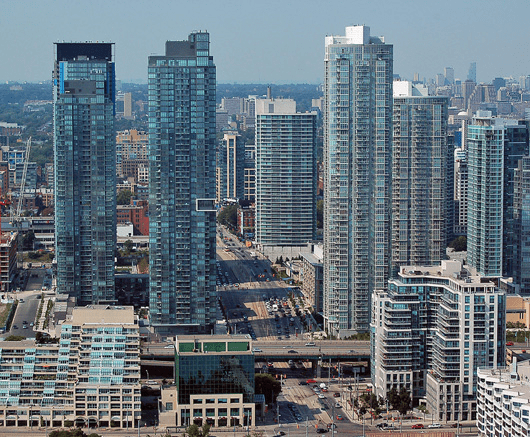
Condominium developers run the city of Toronto.
Is there any denying that?
We’ve seen, through the TTC subway fiasco, the Rob Ford saga, and other events over the last few years, that Toronto city councillors are absolutely useless, and couldn’t agree on how to order a pizza, let alone run a city.
So it should come as no surprise to you, when I suggest that the true “mayor” of this city in the last decade has been a consortium of condo developers, both large and small.
No person, or entity, has had a larger influence on Toronto in the past decade than condominium developers. They have changed the look, feel, size, density, and ‘vibe’ of the downtown core, more than any ruling politician ever could, or will.
Of course, this could be seen as a bad thing, or a good thing, depending on who you are and how you feel.
Although I work in real estate, and I sell thirty or forty condos a year, I am far from pleased with how the downtown condo explosion has taken place.
Over the past five years, I’ve become a consumer advocate for spurned condo buyers, and a loud voice in the fight against condo developers with lower standards than they have scruples.
My voice, unfortunately, is non-existent in the grand scheme of things. With every blog post that I write about the perils of purchasing pre-construction condos, another dozen people go out and buy, and then complain 2-3 years later when they see what they got into.
The Toronto condominium construction industry is the Wild Wild West, with no rules, no repercussions, and no accountability.
The “Condominium Act,” written in 1997, is out of date, and developers have learned how to expose it, work around it, and exploit the loopholes.
Back in early 2012, I wrote a blog post whereby I compared the Condominium Act and its need for reform to that of the National Hockey League’s Collective Bargaining Agreement; arguing that just as NHL general managers have learned to exploit the CBA, condo developers have done the same with the Condo Act. Only the CBA is re-negotiated every five or ten years, whereas the Condo Act has never been reviewed.
This is probably one of my favorite posts that I have ever written, and am most proud of. Ironically, the content of the post (specifically Ilya Kovalchuk’s contract) seems quite relevant given the events of two weeks ago!!! Have a look at it HERE if you have time. It’s worth reading.
It is going to take time, effort, energy, money, and a collaborative effort across multiple political parties and jurisdictions to solve what can only be described as a “condo crisis,” and personally, I don’t think it’s going to happen.
Back in January and February of 2012, NDP MPP, Rosario Marchese, was making headlines with his suggestions for changes to the out-of-date Condominium Act of 1997, and here we stand 18 months later, with little to show for it.
Here’s a short article from last week’s Toronto Star:
Changes To Condo Act Will Offer Greater Protection To Residents, Liberals Say
By: Richard J. Brennan
The Toronto Star
Wednesday, July 17th, 2013
Queen’s Park is proposing greater protection to the more than one million condo dwellers in Ontario, according to an announcement planned for Thursday.
Proposed changes to the 15-year-old Condominium Act follows a year-long review by government and industry officials and condo owner representatives.
Among other things, the province is planning to introduce mandatory qualifications for condominium managers, the first of several changes expected to aid condominium owners, tenants, and buyers.
“There is an overwhelming consensus that condominium managers be qualified and licensed to carry out their significant responsibilities. One in 10 people in Ontario live in a condominium and their quality of life depends to a great degree on qualified, well-trained condominium managers,” said Consumer Services Minister Tracy MacCharles, who will hold a news conference Thursday in Toronto’s Liberty Village.
Condominiums represent about 50 per cent of all new homes built in Ontario, with about 10 per cent of the province’s population calling a condominium home. There are about 600,000 condominium units with 9,000 condominium corporations.
Linda Pinnazotto, president and founder of the Condo Owners Association of Ontario, told the Star Wednesday her group agrees “that condominium management companies and condominium managers need to have a government licensing structure.”
The ongoing review is looking at what mandatory qualifications there should be for condominium managers and how to oversee licensing and standards. A final report is expected by the end of the summer.
Even though many managers are responsible for buildings worth tens or hundreds of millions of dollars, with matching operating budgets, they are not required to have training or an understanding of the Condominium Act.
“On behalf of the Association of Condominium Managers and more than 800 registered condominium managers, we are pleased that the government recognizes the importance of a regulated condominium management profession,” said Dean McCabe, vice-president operations, Wilson Blanchard Management Inc., and past president, Association of Condominium Managers of Ontario.
Toronto NDP MPP Rosario Marchese, longtime champion of condominium law reform, saw his hopes for a private member’s bill dealing with condo protection dashed last fall when then-premier Dalton McGuinty prorogued the legislature.
Under his proposed law, there would be a condo review board, a tribunal to resolve disputes among owners, condominium boards, property managers, and developers.
I applaud Mr. Marchese’s efforts in this hopeless battle, but time and time again, we see politicians make headlines with ideas and opinions, only to see them disappear shortly thereafter. If it were up to Mr. Marchese, this “review” and this process would have been different. Mr. Marchese’s suggestions are far more in depth than what’s actually being done. He’s gone as far as plans for dispute resolution, when currently, condominium developers don’t even acknowledge disputes. Unfortunately, this condo review is being overseen by a different political party, and it’s not happening as fast as anybody in Toronto would like.
You can read all about the “Ontario Condominium Act Review” HERE on the Province’s website.
As I see it, there are three major issues facing any potential change or review to the Condo Act:
1) Time
2) Knowledge
3) Power
Time is the killer here.
It’s like a dam with a hole in it: the hole needs to be plugged asap, as water is leaking everywhere, but the powers-that-be won’t plug the hole until they’ve exhausted every possible alternative, come up with countless ways of plugging the hole, and dragged the process out for years – all the while, water continues to leak. By the time they fix the hole in the dam, there will likely be another hole elsewhere, and the water that has leaked in the interim will cause another catastrophe.
I understand that politics isn’t easy, and that quick fixes don’t happen. I understand that this is a process, but not only was it started about eight years too late, but it’s going to take ten times as long as would be helpful to Ontario residents who NEED Condo Act reform.
Don’t even get me started on the lack of foresight, planning, and vision that the powers-that-be (think: O.M.B, and others…) have demonstrated as condo developers have ruined downtown Toronto. But looking forward, and not back, I’d like to think that the changes to the Condo Act, at the provincial level, won’t resemble anything like the TTC subway debacle at the municipal level.
As for the “knowledge” I speak of, I don’t believe that the people conducting these “studies” and “reviews,” and the people responsible for enacting change, will have greater resources and influence then the lawyers for condominium developers who will look to exploit the new Condo Act, and who will undoubtedly come up with longer, more complicated, and more creative Agreements for buyers to sign when purchasing pre-construction condos.
And as for “power?” Well, just as I believe that TARION, which is supposed to protect Ontario consumers, is actually run by condo developers, I believe that the city of Toronto itself relies so heavily on money from condominium developers, that ultimately they’ll remain powerless to enact meaningful change.
For now, I suppose, we’ll take what we can get.
A study, a review, a promise – it’s better than nothing.
Isn’t it?




























AsianSensation
at 4:31 pm
DF, I applaud the changes, and agree with you regarding time and bureaucracy being an enemy of such policy changes.
However, I think there’s more to the issue. I feel complacency and greed are at the root of it. If I buy a condo for a ‘flip’ or hold it for 2-3 years, how much do I really care about property management enough to put up a fight over policies?
It’s like leasing a vehicle you never intend on owning.
The bare minimum of maintenance is often spent just to keep it running.
I’d love to see a policy change whereby Condo boards must ONLY be comprised of those living WITHIN the building. But of course that will never happen in my lifetime.
Preach on brutha!
ScottyP
at 5:21 pm
Taking into account the complete lack of green space, appealing street-level aesthetics, public art, or even public parking found courtesy of 95% of new condo developments to the way that omnipresent condo construction has brought an already impossible traffic situation downtown to a standstill to the fact that density is being added to the core without the necessary infrastructure to accompany it (breathe), and I’d say that yes, this city has indeed been ruined by condo developers.
This city is broken, and a long-standing leadership void at all three levels of government is to blame. Any Torontonian who plans on voting for their incumbent at the municipal level, and/or for the governing party at the provincial and federal levels, should wake up, take a good sniff of their morning coffee and think long and hard about their priorities.
This city is becoming (has become?) a complete mess before our eyes, and it’s going to take someone special to get it back on track. Instead, we’re going to get Olivia Chow or John Tory. It’s nothing short of sickening.