

Did I mention that I have family in London, England?
Here’s a funny story for which the parallel is somewhat apt…
Back in 2016, one of the major international stories was Brexit. Prime Minister David Cameron announced that a referendum would be held on June 23rd that year to determine if, in fact, the United Kingdom would withdraw from the European Union.
Britain had entered the “European Communities,” or EC, back in 1973 before it became the European Union in 1993, but by 2013, discussions had seriously begun about exiting the European Union.
It took three years, but a referendum was eventually held.
As we all know, 51.89% of the thirty-three million voters ultimately cast their ballot in favour of the exit.
But the most amazing part of this story, in my opinion, comes next.
On June 24th, 2016, the day after the referendum, there was one term searched on Google more than any other in the United Kingdom.
Which term?
This one:
“What is Brexit?”
That’s right.
One day after 33 million people cast a vote in the Brexit referendum, the most commonly searched phrase was “What is Brexit.”
You have to laugh at that, right?
Whether the people who abstained from voting made up the majority of those searching for answers, or whether it was people who actually voted “yes” or “no” who wanted to know what they had voted on, I found this exceptionally amusing.
Last month, we saw countless articles in the major newspapers about “multiplexes” in Toronto as there was a vote at City Hall (which we’ll get to in a moment), and the media covered this story both before and after the vote and subsequent announcement.
There are many supporters and perhaps even more detractors. As is the case with just about any discussion on development within existing communities here in the city, there were all kinds of responses and opinions.
But one article really stuck out to me:
“Toronto Wrangles With A Simple Question: What Is A Multiplex?”
The Globe & Mail
June 5th, 2025
Alright, it’s not quite as funny as the “What is Brexit?” story, but the point is made, isn’t it?
Residents all over the city are screaming about multiplexes, and many of them don’t even know what they are!
Is it possible to dislike something you don’t understand?
Can you fight against something when you know very little about it?
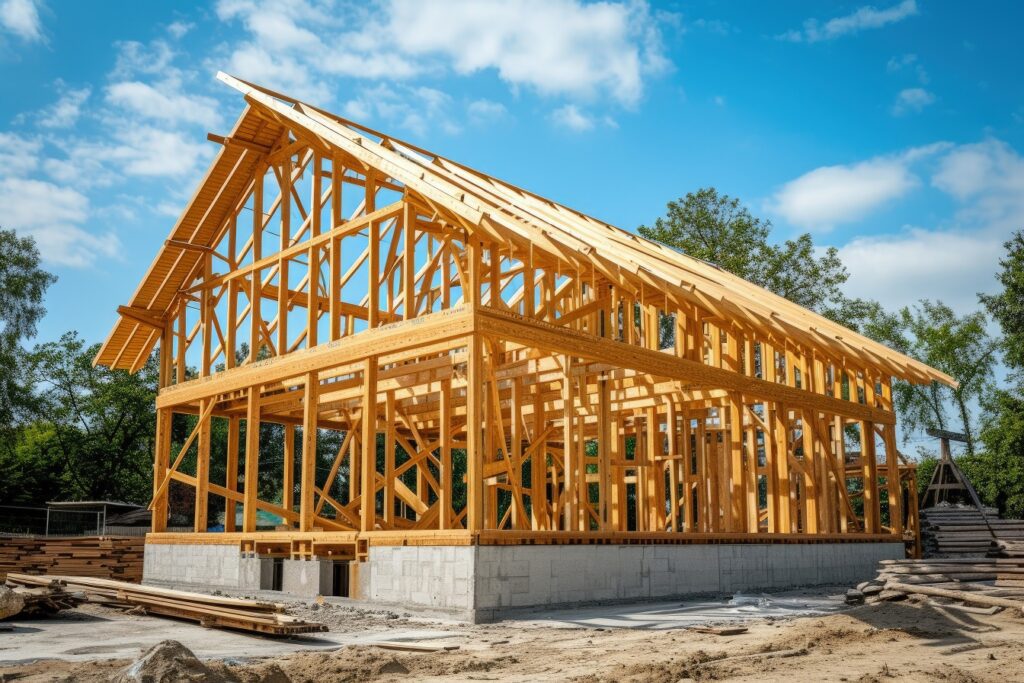
I did an image search for “multiplex” on several of the image websites that I frequent, and this is what most of them thought a multiplex was:

No.
Not that kind of multiplex.
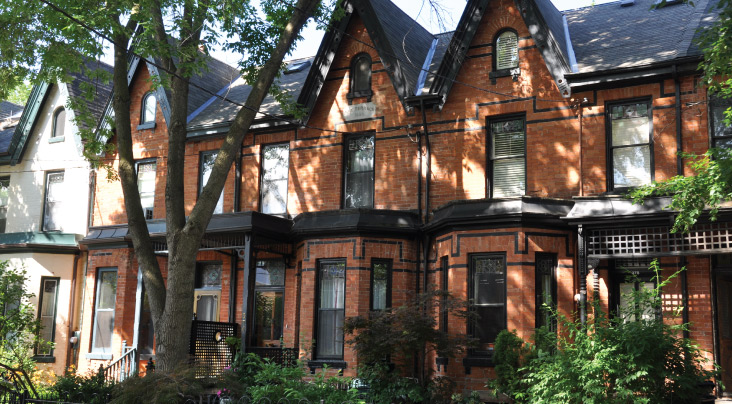
Here in Toronto, we’re talking about small buildings within residential neighbourhoods that house three, four, five, or even (gasp!) six units, as City Hall has been debating as of late.
I wonder how many Toronto residents are protesting the construction of multiple-theatre movie cinemas in their neighbourhoods?
Maybe the same number as those who voted in favour of Brexit because they thought it was society’s attempt to ensure people are hurried from their tables after consuming Sunday breakfast?
Sorry, that was the best Brexit-pun I could think of…
Leading up to the scheduled debate and vote at City Hall on June 25th, multiple newspapers published back stories on multiplexes, highlighted by the Globe & Mail article posted above.
From the article:
What, exactly, is a multiplex?
According to the City of Toronto, a multiplex built in neighbourhoods zoned for low-rise residential can have up to four units. Council’s planning and housing committee next week [June 12] will begin considering whether to stretch that definition, so multiplexes can have up to six units, with apartment buildings re-defined as anything with seven or more.
Sounds simple enough, right?
Except, as the article explains, it’s not all that simple…
Take the example of two semi-detached houses that could each become fourplexes. “We’re actually building one or two of these now,” says Brendan Charters of Eurodale Developments. “We slipped in before the City of Toronto started to say, ‘Wait a second, these are duplexes. We can’t fourplex them because they’re semi-detached duplexes.’”
In other cases, city planning examiners have deemed that such conjoined projects are actually small apartment buildings, which council has voted to allow in areas such as major streets but nonetheless run into opposition from neighbours and committees of adjustment.
To confront these ambiguities, city planning staff will also propose additional categories – e.g., “detached houseplexes” or “semi-detached houseplexes” – to capture anomalies in the original multiplex bylaw, based on in-depth analysis they carried out on the first 222 multiplex applications submitted for approval (as of last summer).
Yet another twist in this definitional maze focuses on the number of bedrooms in a given unit within a multiplex.
The city’s attempt to regulate the number of bedrooms touches some tricky planning questions. While council has been pushing the development industry for almost two decades to build more two- and three-bedroom apartments in order to allow families with children to live in high-rises, the market reality is that condos of that size tend to be very expensive and difficult for young families to afford. What’s more, demand for apartments with several bedrooms includes older people who are downsizing as well as students or unrelated adults who need to share larger apartments in order to afford rent.
Yet when planning officials analyzed the first 222 multiplex proposals, they noticed a handful where each unit had six to nine bedrooms, which suggested that the builders weren’t thinking about families. In effect, a single multiplex with four such apartments might have up to 20 to 30 bedrooms in total, making it for all intents and purposes a rooming house. The planning department’s solution will be to impose a limit on the total number of bedrooms in a given multiplex, but allow the builder to decide how to distribute them among the units.
They lost me at “city planning staff will also propose additional categories,” since this probably means more studies, reports, briefs, findings, consultations, and eventually another twenty government jobs, but I digress.
And if you love to talk about government waste, then there’s an even better line above.
Do you see it?
This one:
While council has been pushing the development industry for almost two decades to build more two- and three-bedroom apartments in order to allow families with children to live in high-rises…
Two decades.
A government shouldn’t be “pushing,” aka trying anything for two decades. This simply underscores the incompetence of those in charge.
The author of that article, John Lorinc, also penned this on the website www.spacing.ca:
“Lorinc: What’s So Scary About Six-Plexes?”
John Lorinc
June 24th, 2025
From the article:
Some context: the city’s goal is to add 285,000 new dwellings by 2031. As of Q1 2024, Toronto has created almost 78,000 new homes, which means we’re more than a quarter of the way to that target. This year, however, the growth has been anemic: just 4,500 units.
The planning department projected that the market would produce about 55,000 missing middle-type units by 2031, and then continue to accelerate through 2051. In other words, those missing-middle type buildings — everything from laneway suites to sixplexes to small apartment buildings — could account for a fifth of Toronto’s housing needs over the next half decade. The city’s analysis also shows clear growth in this scale of gentle intensification since 2011 — further proof that the market not only exists but is beginning to gain momentum.
Opponents of intensification frequently make the mistake of imagining rapid changes within their neighbourhoods. And this phenomenon is not unknown. In the 1980s, Committee of Adjustment decisions allowing post-war bungalows on deep lots to be replaced by large homes with sunken garages rapidly transformed entire streets in parts of North York. The value of those tiny dwellings plunged to zero in the face of land speculation.
Quite apart from the moral panic about tenants having the temerity to move in to residential neighbourhoods, the planning department’s analysis shows that this brand of wholesale development won’t happen — there’s not enough capital, and the value of existing single-family homes won’t collapse in the face of some feared tsunami of multi-plexes.
Finally, the elephant in the room: the condo real estate bubble in Toronto has burst and isn’t coming back anytime soon. Developers can’t launch new projects, even if they have the zoning and permits in hand, because no one is investing in pre-sales, especially the tiny, unliveable units that flooded the market and are now under water. What’s more, even residential real estate prices are down, with sluggish re-sales and an end to bidding wars.
In other words, if there was ever a time — ever — for the city to green light a new type of modest rental housing that is economically feasible, we’re in the thick of it. Flat land values make these projects increasingly attractive. The construction trades will need the work. The small-scale developers interested in missing middle housing are now out there, building.
Many Torontonians — young people, those working in critical professions that don’t provide enough income for down-payments, etc. — want housing that is humanely scaled, street-oriented, and replenishes neighbourhoods that have been losing population for years.
As ever, there will be council naysayers and their mouthpieces determined to go to war against sixplexes by ordering up more studies, carrying out endless consultations, fussing about parking, advocating for bespoke exceptions, etc.
Toronto council would be foolish in the extreme to miss this generational opportunity. Mayor Olivia Chow needs to whip the vote and bring home a yes. The decision, in my view, is a legacy-maker in a city that has lost its way when it comes to housing. Let’s not waste the moment.
Great column!
It almost makes me want a sixplex built next door to me. Almost…
In any event, proponents of “housing solutions” and those alike who speak to the “missing middle” were sorely disappointed last week when Toronto city council debated and then voted on sixplexes in our fair city.
Here’s coverage from our prestigious national broadcaster:
“Council Votes To Allow Sixplexes In 9 Toronto Wards, Leaving Suburbs To Opt In”
CBC News
June 25th, 2025
When we were in our formative years, we were taught that a “compromise” was a good thing.
But in the case of this absolute debacle at City Hall last week, the compromise was yet another example of how most city councilors refuse to go out of their way to accomplish anything, for fear of affecting their chances in future elections.
From the article:
Following a long debate Wednesday, Toronto councillors compromised on whether to allow sixplexes across the city, voting to allow the multi-unit housing in only nine wards and giving other wards the chance to opt-in.
Coun. Gord Perks, who was pushing for a city-wide adoption, ultimately introduced a motion “very reluctantly” to allow sixplexes in eight Toronto-East York district wards and Ward 23 (Scarborough North), where a pilot is already in place, saying he wanted to increase housing density in some capacity rather than none.
“I’ve spent a considerable amount of time and effort working with my colleagues on council, trying to find majority support for doing what this council already committed to in 2023, which is city wide sixplexes,” he said after hours of debate. “But I’ve been unable to find that.”
Along with Ward 23, the following wards will now allow sixplexes:
- Ward 4, Parkdale-High Park.
- Ward 9, Davenport.
- Ward 10, Spadina-Fort York.
- Ward 11, University-Rosedale.
- Ward 12, Toronto-St. Paul’s.
- Ward 13, Toronto Centre.
- Ward 14, Toronto-Danforth.
- Ward 19, Beaches-East York.
The motion allows councillors of the remaining 16 wards to make a request to the city’s chief planner to opt in if interested in allowing sixplexes.
Don’t get me wrong, I have no interest in a sixplex in my neighbourhood, but the hypocrisy involved with this “plan” and subsequent debate is ludicrous.
Councilor Stephen Holyday, one of the few city councilors with whom I have faith, notably said, “Why don’t we just ask the people what they want?”
Because politics doesn’t work that way.
Here’s a step-by-step guide on how politics works:
- Politicians say the right things to get elected.
- Elected politicians push their own agendas and ideologies.
- These elected politicians tell us that this is what we wanted.
- We argue against their unpopular legislation and ideology.
- Again, they explain that this is what we wanted and tell us how good it is for us.
There was nobody better at this than former Prime Minister, Justin Trudeau, and I believe Mark Carney will prove exceptional at this, but I’m veering way, way off topic….for a change…
In any event, Stephen Holyday is right when he says, “They’re not satisfied with ramming through sixplexes in communities that were never designed to house them.”
But the problem is: no community was “designed” to house a multitude of sixplexes. It’s unrealistic to think we can rely on 1950’s infrastructure to support unheard-of levels of density in 2025.
So in the end, we get a half-measure.
Classic!
Absolutely classic City of Toronto.
The opinions on City Hall’s achievement/failure continued to flow.
Here’s a Globe & Mail article, which you can tell from the title, does not applaud the efforts of our city councilors…
“On Housing, Toronto Fails A Crucial Test”
The Globe & Mail
June 28th, 2025
From the article:
Toronto City Council had a chance this week to take a clear, practical step toward solving its housing crisis.
Surprise: It did not. Instead, the city’s leaders cowered before the most reactionary elements in local politics and seemed ready to waste $60-million in the process.
With Thursday’s vote, council had to decide whether to legalize “sixplexes” – apartment buildings of up to six units – across the city. Suburban councillors responded by claiming that this, in effect, would destroy Toronto.
There was real money on the line. Toronto had promised to legalize six-unit buildings when it accepted $471-million from the federal government’s Housing Accelerator Fund in 2023. This year, then-housing-minister Nathaniel Erskine-Smith confirmed that Ottawa expected the city to hold up its end of the bargain, and warned that about $60-million could be withheld.
In the end, council passed a compromise motion that may or may not pass muster with Ottawa. The new, looser rules apply in just nine wards, including old Toronto, East York and the Scarborough North ward of Councillor Jamaal Myers. The remaining two-thirds of the city will remain safe from an imagined influx of tenants.
Wait, don’t forget this part:
And Mayor Olivia Chow? She barely spoke. She ultimately supported the compromise, but she declined to stand up for a bolder vision. For a mayor elected with a mandate to address housing and equity, that silence was striking.
Yeah, that tracks.
There’s nothing really “in it” for her.
Plus, nobody offered her the opportunity to dress up and dance…
But the article above highlights yet another important piece of the puzzle:
There’s $471 million at stake.
Ah, yes! Remember when our federal government decided that provinces and cities should be treated like children and operate on a reward system?
A subsequent article in the Toronto Star makes it more clear:
“Toronto City Council Waters Down Proposed Sixplex Legislation, Limiting Changes To Certain Neighbourhoods”
Toronto STar
June 27th, 2025
The sub-title of this article tells us what this whole story is about, as it reads:
“The push for sixplexes citywide is tied to $471 million in federal funding.”
Alright, so is that why we’re allowing sixplexes?
From the article:
The citywide legalization push is tied to a massive parcel of federal funding given to city hall. In 2023, the city struck a deal for $471 million in federal funds. Among conditions, the deal required staff to report back on opportunities and bylaws for citywide sixplex permissions by June of this year.
But like other efforts to allow denser housing forms across Toronto, the issue has divided constituents as well as councillors.
Also:
Asked about the fate of the $471-million deal with Ottawa should the proposal not receive council’s green light, Chow said the city had already spent some of the money, which it receives in installments, and would have to negotiate.
A March letter to Chow from former housing minister Nathaniel Erskine-Smith, which she later shared, warned that if Toronto did not “fully implement” its agreed-upon initiatives on time, it could lose 25 per cent of its annual payout.
Even before the sixplex debate began, the issue loomed large over the chambers, with the speaker chiding councillors for leaving their seats to share their views with reporters.
It’s all a little bit depressing.
One step forward, one step back. And on, and on, and on…
Doesn’t it feel like we live in a city where nothing actually gets done? It’s just talk, all the time.
And here’s where I land on this, so don’t fault me for my honesty…
I will likely never use public transit again, and yet I am one of the largest proponents of massively expanding our existing public transit system. I have been saying this for fifteen years, and I think we should be spending billions every year. Keep digging tunnels, all day, all night, in perpetuity, and never stop. Subway, after subway, after subway. It’s the only way this city avoids cannibalizing itself, which is well underway.
By the same token, I will admit that I don’t want to live next door to a sixplex, but I am in favour of legislation that makes multi-unit dwellings easier to build or convert. We desperately need housing in this city and the federal government, despite all their talk (this is a future blog post), isn’t going to get it done.
But the ability to build is only one thing.
The cost is another story altogether.
If the City of Toronto wants people to build multi-unit dwellings where they could otherwise build a McMansion and flip it to a single-family, then they need to do away with the ridiculous development charges that add up with each additional unit of housing.
And yet, the debate rages on.
I’m sure the folks at City Hall are still debating their debate. Don’t hold your breath on this one, folks…




















Marina
at 10:08 am
Oh sweet Mary on the donkey, this topic comes up regularly in my friend group and it p*sses me off to no end.
First of all, Toronto’s density is absolute garbage. It’s either really high, but with unlivable units, or really low. we need more balance. Otherwise we end up with elementary schools like Eglinton Public that pack 40 kids to a classroom and schools one subway stop away with 20 kids to a classroom. Not to mention the imbalance in all other services.
Second, for some reason when six-plexes get mentioned people picture every other building in their neighborhood being a six-plex. That wouldn’t happen for a VERY long time, if ever. I live in what I’d call a pretty fancy schmancy area. My back yard faces a $8 million house that needed a ravine to separate them from me and my ilk, but I try not to take it personally. But on my way to the subway I walk past 2 low rise apartment buildings. One street over, there are a dozen or so four-plexes. Guess how much it impacts the area or my quality of life? Having a little more density is not a bad thing, especially because it does bring some diversity to the area.
And that’s another thing. Having different housing options does diversify the neighborhood. I’m not talking about putting in a rooming house or a shelter (that’s a whole other topic). I’m talking about having some of the service providers for the area actually living in the area. Some cultural and income diversity is a good thing – keeps kids a little more grounded and a little less entitled and sheltered. But my personal nightmare is having my kid turn into a d*uche bro, so I might not be representative of everyone.
So would I want to live next door to a six-plex? I don’t think I’d mind that much. I also bought in a place that such a build won’t make much sense right next door, but again they are present in the area. And the houses next door sell just as fast. Make them available everywhere. Put some restrictions so they are family centered. And get the density up in a sensible, balanced way.
Derek
at 10:24 am
The multiplexes under discussion are exclusively apartments, as opposed to being mini-condos?
Broadly, what would be worth more: a new build 4BR single family home, or a new 6-plex next door?
Ace Goodheart
at 2:22 pm
Well I guess we finally get sixplexes in Parkdale High Park Taiaiak’on.
We’ve actually had them for a long time here. They are built inside our existing single family home stock. You can find them by counting the number of electricity meters on the outside of a house. For some reason, hydro doesn’t care how many units are illegally put into a single family home, and will install as many hydro meters as you want, no questions asked.
These houses are inventive. I have been to birthday parties in them. One had a kitchen where you could actually see into the neighbour’s living room, as all they did was nail the doors closed. Caulking was used to seal the gaps, but it didn’t work all that well.
Another had the notorious “stairway to nowhere” where the steps stopped dead in front of a badly finished drywall section, where you could still see the trim where the railings used to be. Those stairs used to lead to the upstairs, which was now a separate unit with an entrance out back.
My favourite was the bathroom with a blocked in window. Behind that window was the neighbour’s bedroom. The window had been blocked over with a piece of plywood. Then a bedroom for another unit had been tacked onto the back of the house, where a porch used to be. I guess you could just unscrew the plywood, and you would then have a window from your bathroom that looked directly over your neighbour’s bed?
We have had six plexes here for a long time. I guess now we will have rules for them and they will actually be legal.
Vancouver Keith
at 2:02 am
Rearranging deck chairs on the Titanic. Increasing density raises the value of the land, and new building at current prices means that units are smaller and less affordable than the lower density stock they replace. Affordability is less, livability is way less. Not enough parking, schools hospitals or green space for all the increased population. Private profit up, socialized real costs also up. Notice the financial crisis at every level of government these days, despite massive population increases and real economic growth. Something amiss in the economic model, methinks.
Marmota
at 8:26 am
Wow, talk about a Debbie Downer.
Is there anything positive in the city, or the world for that matter for you?
The city is maturing… it’s having growing pains and will slowly adapt to it’s population (and vice-versa). If you look at European cities, they’ve had hundreds of years of growth and change where it’s inhabitants complain about the same things yet here they are. All the cities, including Toronto are more livable today than they were 10, 50 or 100 years ago.
What economic model do you propose that is better than what we have?
Vancouver Keith
at 12:28 pm
Your comment makes me wonder if you were alive 50 years ago.
Ace Goodheart
at 12:55 pm
There’s a lot more condos downtown than there used to be. The leafy suburban neighbourhoods didn’t change that much at all.
So it’s kind of a mixed bag as to whether Toronto is more liveable now than it was 50 years’ ago.
50 years’ ago, Yonge Street was a lot of fun. The shops, restaurants, arcades and weird little hole in the wall hangout places meant you could spend days wandering and never run out of things to do. Today it is mostly wall to wall glass condos with almost no street life. Every so often they decide to destroy another of the last remaining little pockets of small business, usually by conducting a “facade – ectomy” of some poor old group of Victorian era buildings, evicting the long term tenants and replacing them with walls of glass and “sitting areas” inside what remains of the old structures.
So while you have the same suburban streets, they surround a downtown core that has been radically changed by out of control development. There are still bits and pieces of the old city left (including Queen street West, which has one of the best preserved sections of Second Empire style construction in the entire world), but they are slowly tearing all of this down, again to replace it with the usual endless glass and steel condo construction that has taken most of the old city from us.
Perhaps if we allowed some sort of densification in the suburbs, we wouldn’t have to completely destroy the downtown?
Steve
at 9:25 am
Weird to entirely ignore that the provincial government, not exactly known for its ability to stay out of municipal issues, had the option to bypass all of this by allowing various types of multiplexes as of right province wide but passed the buck. Then in turn council passes the buck to individual councilors and here we are.
Additionally, it seems just slightly hypocritical to laud Holyday for wanting to ask the people what they want while in the same breath lamenting city planning staff for all their studies, reports, briefs, findings and consultations. At the end of the day Holyday is the fearless leader of “not in my ward” which is an enormous part of why nothing gets done in this city and a driver for why the options were either (1) no progress at all or (2) this weird compromise.
Pattym
at 1:12 pm
I have always shared David’s opinion regarding Toronto transit. I live in Kelowna now and here many older homes on large lots are replaced with 4 – 6 townhomes. These homes have units facing the road with outdoor space in front and units facing the back with outdoor space and garages along the back. They are very nice and suit existing neighbourhoods well. They are a wonderful condo alternative for seniors and families. There are also many purpose built senior communities. Toronto has always lacked the political will (courage) to make decisions that benefit the city rather than the politician and squeaky wheels.