
I really don’t want to talk about it.
Or think about it.
I can’t get into it. I think I’ll be sick. It makes me want to cry. It makes me want to remove the maple leaf tattoo on my back.
I just ask one thing: once the election is over, can those of you who support you-know-who just try not to do too big a victory lap?
Good lord, how did we get here…
In any event, many of us have spent the last several weeks sifting through all the campaign promises (lies?), looking at what the various parties and candidates are offering us (bribing us with?) in exchange for our votes, and every one of us has our one area of focus or issue that’s at the top of our list.
Personally, I took one of those “Who Should You Vote For” surveys, and the fact that I was even being asked some of those questions was enough to rattle me and show me where society has gone.
In any event, I’ve heard a lot about this notion of eliminating HST on new construction, and while it’s ironic that I’ve been championing this for many years and now am going to question the effectiveness of it, I think it’s a conversation that needs to be had.
Not only that, I think it might lead into a question about how otherwise to help with “affordability” if we were to determine that reducing or eliminating HST won’t have the intended (or promised?) effect, and since you’ve already read today’s blog title, you know where I’m going to take this…
So first and foremost, consider this:
Buried in the price of every new house or condo offered for sale is a ridiculous amount of HST.
We live in a world with among the highest sales tax anywhere on the planet.
13% is a lot, on a relative basis, especially considering our rates of income tax and the thousand other taxes that exist in this country, including many sneaky ones (like when you buy a TV and the government assumes you’re disposing of another TV, so you’re charged a fee for doing so), but I digress.
13% is a lot when you purchase a chocolate bar for $2.00. It’s only 26 cents, but on a relative basis, that’s a lot.
13% is a lot when you purchase a car.
And if you purchase a particular car, don’t forget, you have to pay a luxury tax, since our government wants to punish you for being successful, and the have-nots are angry that you have, but I digress…
All this is to suggest that, as crazy as it is to think about the absolute amount of tax paid on a high-dollar purchase like a car, compared to the relative amount of tax purchased on something like a chocolate bar, nothing compares to the idea of paying the relative and absolute numbers associated with a new home.
It’s insane.
I’ll save the calculations because they’re anything but straightforward, but a $1,000,000 new-build in Markham might cost you $895,000 if the government wasn’t charging HST to the developer.
I often wonder what would happen if HST was added on instead.
Imagine a sticker price of $899,000 for a new detached home in Innisfil, and then imagine 13% being added on top of that.
Would buyers revolt?
I assume this is why developers began including the HST in the price to begin with, but either way, it’s an absurd amount of money.
Call it “fair” or call it “necessary,” but don’t disagree with one simple fact:
HST applying to new homes does not help with affordability in a country that struggles with affordability.
I have written about the HST many times on Toronto Realty Blog so I’m not going to bore you with links to past articles.
What I will bore you with, however, is the following:
“The Increasing Tax Burden On New Ontario Homes”
That’s a blog post that I wrote in December of 2024 in which I outlined that a whopping 35.6% of the cost of a new home is made up of taxes, including HST, as well as many others.
I want to explore those “many others” in a moment, but first, let’s stick to HST.
Amidst all the election promises, party leaders are offering “housing affordability” by eliminating the federal portion of HST that applies to new homes, which amounts to five percent.
Two weeks ago, this article ran in the CBC:
“What Election Promises On Housing Would Mean For Toronto And The GTA”
CBC News
April 11, 2025
The section that really concerns us today is that which discusses HST.
From the article:
Both Liberal Leader Mark Carney and Conservative Leader Pierre Poilievre have promised to eliminate the five per cent federal goods and services tax off the purchase of some new homes, but the promises differ.
The Liberal proposal is limited to new homes under $1 million, for first-time home buyers only. The Conservative proposal would cover a wider range of purchases: all new homes priced under $1.3 million, regardless of the buyer.
There are questions about how far either proposal would go toward making the Toronto housing market more affordable.
GST is not charged on resale home purchases, and resale accounts for roughly three-quarters of the residential real estate market in Toronto, based on resale data from TRREB and new home sales data from Altus Group and BILD over the past decade.
Steve Pomeroy, a professor at the Canadian Housing Evidence Collaborative at McMaster University, says the GST cuts will help stimulate some new home construction, but says the Liberal and Conservative claims that the move would save new home buyers up to $50,000 or $65,000 off their purchases are not entirely accurate.
“It’s a good 10-second political sound bite,” said Pomeroy in an interview. “The reality is it’s not going to have that big an effect.”
He says that’s because developers build the sales tax into the market price of a new home.
“You negotiate with the builder for a price and let’s say you agree to $700,000, which would be a relatively modest condo in Toronto,” said Pomeroy. “You don’t actually then add the tax on top of that. It’s already absorbed in the price, because that’s the price you’ve negotiated.”
John Pasalis, president of Realosophy, a real estate brokerage in Toronto, questions the effectiveness of extending a GST cut to all purchasers of a new home.
“How do we make it more affordable for the next generation to own?” Pasalis said in an interview. “I tend to think a policy that gives a tax benefit to first-time buyers, younger families, rather than people who are using homes as an investment is a way to get down that road.”
We can’t debate the accuracy of the above facts and opinions, can we?
I might boldy suggest that the opinions offered by Mr. Pomeroy and Mr. Pasalis are facts.
For many years, I have argued that eliminating HST or one of PST and GST on new home sales woudl be a step in the right direction for housing affordability, but like Mr. Pasalis and Mr. Pomeroy, I’m not suggesting that it’s a magic wand.
As the CBC article notes above, only one quarter of all home sales are new home sales, thus the elimination of some/all of the HST wouldn’t have a sweeping effect across the country.
Not only that, and perhaps most importantly, new home construction has slowed to a crawl this year. Elimination of HST sounds fantastic, but if sales of pre-construction condos are down 90%, then what the heck are we talking about here?
I think we all want to believe – or picture, since politicans love to tell stories about “a family I ran into recently at a local church bake sale,” that the buyer of a new home is a lovely family of five who desperately wants to climb onto the property ladder, and that eliminating HST will help them do exactly that.
But in reality, we know that investors have dominated the pre-sale real estate space for the last decade.
So does eliminating HST really help make real estate more affordable for those who, apparently, “need” it most?
Mr. Pasalis suggests in the article that we focus on “the next generation,” and if we were really going to do that, then we’d need to take a step back and look at the way real estate is taxed. Yet again.
We have no shortage of real estate related taxes in this city, province and country.
Let me again refer you to a blog I wrote in 2024:
“How Can An Increase In Taxes Mean An Increase In Affordability?”
In this blog post, we discussed the following:
-Ontario Land Transfer Tax
-Toronto Land Transfer Tax
-Municipal Development Charges
-Toronto Vacancy Tax
-Underused Housing Tax
-Federal “Anti-Flipping” Tax
-Municipal Non-Resident Speculation Tax
-Ontario Non-Resident Speculation Tax
-Property Tax
-Capital Gains Tax
-HST On New Homes
That’s a lot. But we live in Canada. And there’s an election on Monday. But I digress…
My point is this:
If we really wanted to make housing more affordable for future generations and if we really wanted to give first-time buyers a leg up, we would eliminate ALL land transfer tax for those buyers.
Just consider the buyer of a $1,200,000 property in Toronto.
They would, conceivably, be making a $240,000 down payment, or 20%.
But they would also be writing a cheque to the province and the city for $40,950, minus the silly “rebate” which amounts to $8,475.
That rebate, by the way, is an absolute number, not a relative one.
So when the number was fixed many years ago, it represented greater importance ocmpared to today as prices have risen substantially since then.
Not only that, the land transfer tax upon its inception at the provincial level in 1974 was never intended to have the dastardly effect then as it does on housing now. After all, the first “bracket” in the sliding scale of taxation was from $0 – $55,000, so that has to tell you what prices were like and the negligible effect that the tax was intended to have.
We also never intended to have a municipal tax essentially DOUBLE the amount of land transfer tax that buyers have to pay, as was the case when David Miller brought the tax into effect in 2008.
We never thought (or at least I didn’t…) that the muncipal tax would be increased six or seven times, as it has been since 2008.
And last but not least, we never assumed that the City of Toronto would become so desperately reliant on the tax (often over $1 Billion in revenue per year) that increasing the rate of tax would be “necessary” to offset the decline in transactions.
All this is to say: I think first-time home buyers should be exempt from 100% of the municipal and provincial land transfer taxes.
Now, what if a young man buyers his first condo at 26-years-old and then marries and purcahses a home with his wife at 29-years-old in order to start a family?
Well, now he’s out of luck. He won’t be exempt because he’s already owned a condo, and here’s where things get murky.
But is it any less murky than the idea of eliminating 5% of the HST on new homes and how that is supposed to help with affordablity?
Connect the dots:
-New homes are primarly purcashed by investors, not end-users, not families
-New homes account for (in a good year) only one-quarter of sales
-The federal portion of the 13% HST (in Ontario) is only 5%
It doesn’t seem like the changes that the federal political candidates are promising is acutally going to do what they’re saying it is.
But we already knew that, right?
Because nothing they promise has the effect that they say it will, and I’m convinced that nothing they do will have an effect.
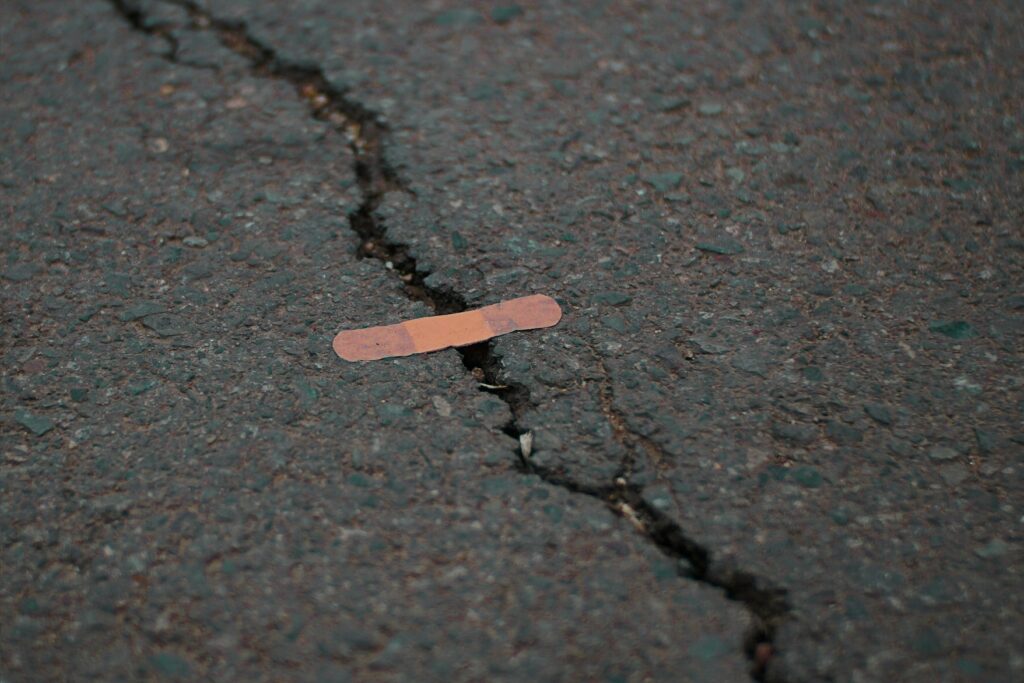
Mucking around with five percent on new homes isn’t the answer.
Attack land transfer tax.
Attack development fees.
And while both happen to fall under municipal and provincial jurisdictions, I refuse to accept that as a reason why the federal government can only consider HST as their “brilliant idea” to increase housing affordabilty.
Poltician after politican acts like Austin Powers and talks about building “One Billion Homes” but that’s fantasy.
If they really want to have an impact, give a financial break to first-time buyers, young buyers, families, or whoever else they want to glorify and salivate over in their campaign promise speeches.
Is there a hockey game on TV on Monday night?
I sure don’t want to watch election coverage.
Nobody enjoys watching their own home slowly burn to the ground…





















Toad
at 6:39 am
I believe this is what they call moving the goal posts.
“Taxes on real estate is too high, we need these reduced!”
Ok, we’ll cut 5%.
“That’s BS and it won’t do anything”
Wait, what?
Obviously you can alway point to cutting more. And you can do this until it’s zero, but even a small cut is a cut. Sure, keep championing for more, but denigrating a small reduction after asking for a reduction does seem petty. If the tone of this article was “great, but let’s keep cutting”, that’s one thing. But that’s not the stance here.
Anyway, if a reduction for new builds make them a bit cheaper, you’d think that resale would have to follow suit in terms of price reduction expectations. And in theory it would spur a bit more building. But sure, let’s champion for more.
David Fleming
at 10:23 am
@ Toad
You’re not wrong.
But we’re at the point where real estate is expensive because of, more than anything else, the three levels of government.
People want so desperately to trust their elected representatives. We would never think they operate with anything less than our best interests at heart.
But the numbers don’t lie.
35.6% of the cost of a new home is made up of taxes.
And while a buyer can amortize the 5% GST buried into the price of a new build, they can’t do that with $40,000 in land transfer tax that comes from their “cash on hand,” thereby limiting their purchasing power and/or ability to decrease their mortgage payments.
Jennifer
at 1:11 pm
There’s also the federal GST rebate. It has been stuck at phasing out to $0 for anything over $450,000 since its inception, with no adjustments over the years. At least you get some rebate for the provincial portion, with no phase out.
Appraiser
at 7:09 am
The full Liberal plan is here: https://liberal.ca/wp-content/uploads/sites/292/2025/03/Mark-Carneys-Liberals-unveil-Canadas-most-ambitious-housing-plan-since-the-Second-World-War.pdf
Part of the plan is to establish a new entity called “Build Canada Homes” (BCH). “BCH will provide $25 billion in debt financing and $1 billion in equity financing to innovative
Canadian prefabricated home builders”
Don’t undrestimate Mark Carney. He was tailor-made to be PM.
He won’t let your house burn down.
David Fleming
at 10:14 am
@ Appraiser
I have so much respect for you, and I want to trust you.
It’s “them” I don’t trust.
My house has been burning for ten years…
Oh Canada!
at 9:21 am
Here we go. Four more years of the Libs. Canada is going to be the biggest Wokedom on the planet. It’ll be unrecognizable in a decade. Entirely DEI based curriculum for your children in school. Re-writing history in a 2025 context. Softer sentences for murderers. Let Paul Bernardo out of jail already! No sentences for car theft rings. Open season for LCBO thieves and jewelry bandits, don’t approach them, just let them walk out. Make lots of clean drugs too. The addicts need safe drugs. Tax and spend. Increase the social safety net beyond capability. Allow hate to immigrate and give them a platform. Pander to the lowest common denominator. Keep increasing the size of government. My gender pronouns are “I’m” and “leaving.”
Ace Goodheart
at 7:31 pm
Carney is a progressive conservative who decided to run as Liberal leader. He’s the most conservative Liberal I’ve ever seen. He’s not Justin Trudeau.
PP was a one trick pony. He blew a massive lead, that would have seen him becoming PM in a conservative landslide, because he couldn’t pivot his campaign (one trick pony, he had nothing else).
I think you guys who fear another tide of wokeness will be pleasantly surprised
Carney is a rich, right wing business person with a heart.
I have a lot of faith in him and look forward to his tenure.
Derek
at 9:50 am
It ain’t over ’til it’s over.
Derek
at 10:58 am
Well, I thought there was a chance the polls were undercounting the Conservative vote, but I guess not.
JF007
at 9:52 am
Cities and Feds have identified LLT/DCs as an easy money grab where they really don’t have to do much to grab that piece of the pie. They are never going to let it go cuz the alternative is massive deficits in their budget which cannot be plugged because successive city planners haven’t really thought about generating revenue from equitable sources or from newer means when their is an old trusted horse to hog whip again and again. Imagine DCs getting splashed or LTT being reduced and suddenly cities have to contend with budgets that don’t even cover the basic services and their inflated salaries and benefits. The sheer horror….
Derek
at 10:05 am
I remember the good ol’ days when the “affordability” discussion around here boiled down to, ‘too bad loser, it’s a free market; not everyone deserves to own real estate’.
Derek
at 10:32 am
When sales were gangbusters, prices rising, all efforts were aimed at poo-pooing any factors listed by the handwringers as blameworthy, decrying any change that might cause a hiccup.
Derek
at 11:05 am
Now, any factor to promote any uptick in activity needs to be implemented by government, when previously, no factor that may have promoted any easing, should’ve even been considered by government.
Ace Goodheart
at 1:59 pm
RE: “Attack land transfer tax. Attack development fees.”
And while both happen to fall under municipal and provincial jurisdictions, I refuse to accept that as a reason why the federal government can only consider HST as their “brilliant idea” to increase housing affordability.”
There is this little thing called the Constitution……
I guess some would say that it would make more sense for the Federal government to control local, provincial type matters. Trudeau thought that made more sense. He tried hard to regulate and control matters that were completely ultra vires the Federal government (outside of their jurisdiction) using the “POGG” powers of our Constitution.
There are now a number of interesting SCC decisions on this behaviour (most to do with carbon taxes).
From what I can see, the reality is the Feds will never control or administer land transfer tax or municipal levies. The case law at the SCC level simply won’t allow that. So all they can do is reduce HST.
As I said, Trudeau was trying hard to involve the Feds in matters that are outside of their jurisdiction. He was facing a show down with his “home equity tax” (you know, the one that the Feds paid that BC communist (cough – columnist) to research, but that they never, ever, ever (really never, I mean they never even thought about it – even though they studied it for years and you now have to put the info on your tax return) ever, ever would have ever actually implemented. Ever (and you have to believe it).
Provincial taxes are a matter for the Province. Municipal levies are a matter for the municipality. You DO NOT, ever, want the Federal government involved in these taxes.
Taxes can come down, but they can also go up. If the Feds are in complete control of housing taxes, you just know that while they might be coming down today, they are going back up again, and then again, and again. The next time we get another Trudeau, and he has control of housing taxes, what do you think is going to happen?
Yup, yep that is right. We are all going to get whacked.
David Fleming
at 11:03 pm
@ Ace Goodheart
I agree completely about the federal government meddling in provincial affairs, and while I shudder at the thought of becoming the “United” States, which is basically 50 individual countries who have completely different laws – many of which work in complete opposition, I also think the federal government should have knowledge, understanding, and influence over the collective workings of the provinces.
Should the federal government be able to “cancel” a provincial tax? No. But they should be completely immersed in the big picture and understand how, for example, people in Toronto are brutalized by two land transfer taxes, compared to a buyer in Alberta or Saskatchewan who don’t pay anything.
As for the rest of your incredible rant, I agree, agree, agree, agree, and…..wait for it….agree.
Serge
at 3:42 pm
In a universe far, far away, market-related affodability meant average house price should be 3-5 times of gross annual income of average buyer. In the current Toronto market, if shaving 15% of current average price, this or that way, going to bring this criterion close? Phew.
Jimmy
at 12:20 pm
What a moronic column. The political leanings are more than evident and more so, self serving. Maybe discuss how the 6 percent (or more) commission that agents get (split between buyer and seller agent) also adds to to the price of a home. One has to ask why an agent who helps a buyer “find” a home for $2,000,000 deserves $60,000. Which is just below the average salary in Canada. The average salary for a teacher, which is more important to society and our future than agents, is around 72,000. Who should be paid more? If agents in the rest of Canada, outside of BC, can live with the prices in their markets, which is still to high, why can’t agents here? Tell me an agent in the GTA should not be happy with 1 percent on a 2,000,000 home in the GTA. There has never been an argument that this is value for money.
Who should pay for the impact on roads infrastructure costs, if not the developer.
I would think that a person who claims to have studied economics as an undergrad, would not want a PhD in economics to be PM. It just show the self serving bias this author has. “Show me the money” right David? Screw the rest of society.
David Fleming
at 11:07 pm
Welcome to TRB, Jimmy.
Your first lesson:
Teachers = public sector
Realtors = private sector
I’m flattered that you called me an “author” though, thank you!
Ace Goodheart
at 6:57 am
You don’t want realtors acting like teachers. The teachers at our kids’ school just decided it is too tough for them to supervise grade 7 and 8 recess.
Their solution? Shorten the school day by 40 minutes (20 on each end) and eliminate recess entirely. That gives them an extra 40 minutes of break time each day! (The town hall they held about this was pretty unbelievable – so many angry parents).
If your realtor behaved like a teacher, you’d be allowed 2 showings, because their collective agreement says maximum two, and you’d then choose which house you like. If you demanded more than two, they’d go on strike.
Crofty
at 2:24 pm
Okay, 123 Any Street is “valued” by the “market” at $1,500,000, all fees and taxes included. Let’s say the fees/taxes are reduced by 5% of the home’s value ($75,000). The owner/builder/developer knows that someone did/will pay $1,500,000 for the house, so that’s what they’ll charge, and likely get, thereby pocketing that $75,000 that no longer goes to a government entity. What in the world makes you all think a fee/tax reduction would be passed along to the buyer?
Jess
at 4:23 am
Hi David, as a FTHB I totally agree with you.
Eliminating or even significantly reducing the LTT by like 75% would help many FTHB. Especially in Toronto with its double LTT.
It’s daunting enough to get the downpayment but then to also essentially have to fork over enough to buy a modest car for land transfer tax is overwhelming.
I could spend that money on other things to stimulate the economy such as home renovations, furniture, tools and appliances – all of which I pay sales tax on so the government gets their revenue and businesses and workers/jobs are supported.
Instead we bought our first home and that $23K we spent on double LTT meant we held off on many purchases for the home and DIYed things like painting and landscaping and installing our own appliances. Oh and we also only “shop “ on Facebook Marketplace for second hand furniture, home decor and kitchen dishes – where we don’t pay any sales tax!
Juhi
at 3:01 am
Transparency is key when it comes to real estate investments. The Whiteland Westin Residences RERA registration ensures that buyers have complete peace of mind and legal assurance. Registered under Haryana RERA, this project abides by all construction, legal, and timeline norms as laid down by authorities. Interested buyers can refer to the official Whiteland Westin Residences brochure for all project-related specifications, approvals, and documentation.
Transparency is key when it comes to real estate investments. The Whiteland Westin Residences RERA registration ensures that buyers have complete peace of mind and legal assurance. Registered under Haryana RERA, this project abides by all construction, legal, and timeline norms as laid down by authorities. Interested buyers can refer to the official Whiteland Westin Residences brochure for all project-related specifications, approvals, and documentation.
Whiteland Westin
https://thewestinresidences103.com/