

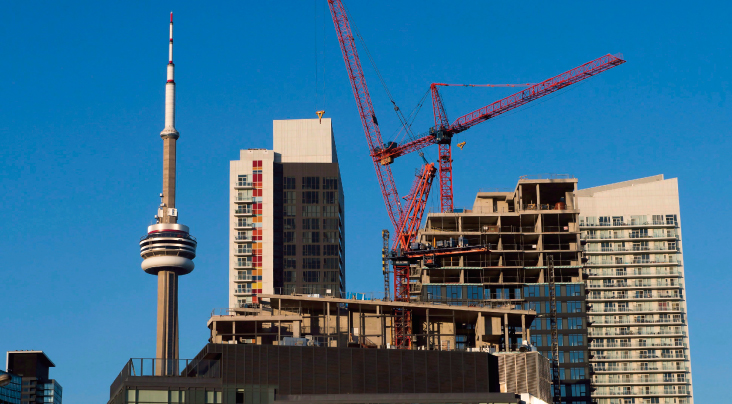
Next week, I’ll be taking possession of a new condo at West Side Lofts.
I’ve been writing about this disastrous project since the inception of my blog, and I can hardly believe that I’m finally getting handed the keys!
Some 300 other owners will also be taking possession and it raises a question: when do we sell?
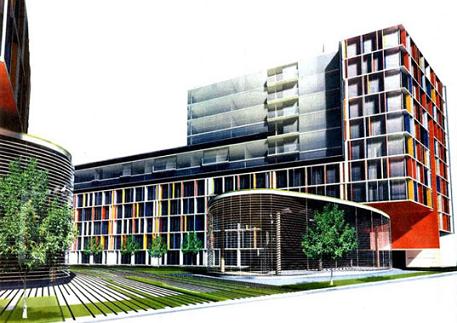
Where the heck is 150 Sudbury Street?
Would you believe me when I say that I actually didn’t know the address of the very condo that I purchased?
Something “clicked” a few months back when I was browsing MLS listings and I was looking at a listing for an address I’ve never heard of – 150 Sudbury Street, and saw the artist’s rendering.
“That looks familiar!”
I guess I thought we’d have an Abell Street address.
God knows I WISH we had a Queen Street address! That alone would be worth an extra $15,000 to each of us! Silly as it sounds…
It’s been a few months since the very first listing came onto MLS for a unit at West Side Lofts, and I’m not actually sure if anything has sold since these are all assignments of the original Agreement of Purchase & Sale and they won’t show up as historical sales.
But market conditions aside, I’ve always asked the question, “When is the best time to sell your condo in a brand new development?”
I know what I think and what I would do, but let’s run down the options.
Option #1: Sell as an Assignment Before Occupancy
This is getting tougher and tougher to do.
An “assignment” of the the Agreement of Purchase and sale is essentially the sale of your original piece of paper that says you bought the condo.
You are assigning that agreement to a third party, who will eventually close the deal.
The issue here (and there are many!) is that you are still liable in case that deal falls apart, or that buyer absconds.
You have to see the deal through to the very end, which leads me to believe that you should just see it through on your own! Of course, this is because I also believe that there is more money at the end of the yellow-brick road, as opposed to halfway along it…
Some developers won’t allow you to assign the agreement, at any time.
Other developers will allow you to assign the agreement for a “nominal” charge, usually around $5,000.
But the issue is one of liability in that you are still responsible for the condominium if the third party cannot close the transaction. So why put yourself on the hook? You might think that you’ve “sold” your new development but in theory you haven’t done anything but collect a deposit. If you start making other plans with your finances, and the third party buyer can’t close the deal in six months, then you’re still on the hook!
And what do you do in the interim with the unit? Do you allow the third party buyer to live in the property that he sorta kinda owns?
Assignments are an absolute legal mess, but they are popping up more and more frequently.
There has even been talk at the TREB level about creating a new category on MLS for “Assignments.”
If you ask me, I want nothing to do with them…
Option #2: Sell During Occupancy
This can take one of two forms:
1) An assignment of the Agreement during occupancy, as per the above description.
2) A sale with a longer closing period; that closing shall take place after the Condominium Corporation is registered and the owners have gone through Final Closing.
Obviously, I like the second option more.
But it might cost you a lot to keep the unit in the interim if you don’t have a tenant in place! Don’t forget – you’re paying an “occupancy fee” to the developer, as well as maintenance fees and property taxes. If you hang onto the unit for six months waiting for final closing because you have a buyer in place, you might encur $15,000 in carrying costs that you’ll never recover!
The other major issue that really goes with Options #1, 2, and 3 is the condition of the building.
If you’ve never been inside a “new” condominium, you really need to see it in person!
A “new” condo is really a “half finished” condo, as the lobby and the amenities aren’t finished, nor are there any carpets in the hallways, light fixtures on the walls, or is there absence of dirty construction workers yelling from 9-5PM.
It goes without saying that the longer you hold onto the condo, the better the building will look.
If you’re looking to sell during construction, ie. Option #1, then you may end up selling a floor plan and nothing more!
If you’re looking to sell during occupancy, ie. Option #2, then you’re bringing buyers through a messy construction zone and trying to point out the positives!
Your condo itself is finished, but nothing else is.
And the gym, rooftop terrace, party room, and whatever waterfall/movie-theatre/nightclub fringe benefit was included to entice buyers during the sales phase won’t be ready for upwards of a YEAR.
Selling during occupancy isn’t a bad idea if you secure a tenant on a short-term basis to cover your costs, and you know you have the utmost flexibility. Losing a month’s rent isn’t going to bankrupt you, but carrying an empty condo for 9-10 months (if it takes super long to get the condo registered) might eat up half your profit.
Option #3: Waiting For Final Closing….and Beyond!
This is my bread and butter.
I ask why anybody would go to all this trouble of putting down a deposit, waiting four years, watching the property be built, only to jump ship before the big payout?
It’s so hard to find a buyer who won’t discount the property because it isn’t finished yet (ie. during occupancy), thus you’ll be selling for less money if you don’t wait until Final Closing!
Show me “before” and “after” pictures of the building, the lobby, the amenities, and the common areas, and then try to tell me that buyers will pay the same price for both the construction mess and the beautiful year-old condo.
The major issue here is that we never know how long until Final Closing.
It could take four months, or it could take twelve.
This is why I elect to secure a tenant for a full year at the moment of occupancy.
Let’s say that occupancy is October 1st, 2010 for my West Side Lofts condo.
I’ll find a tenant through the end of September, 2011, and he will pay all of my carrying costs, and then some. I’m looking at about $600/month in positive cash flow for my 2-bedroom on the 4th floor.
If the building is registered in six months, I’ll have ample time to prepare for a sale in the Fall of 2011.
In the worst case scenario, if it takes up to ten months for registration, I can still sell my condo and close in that two month window.
I truly think that the biggest payout happens if you hold the property for a year after occupancy for the following reasons:
1) The property is finished and it looks fantastic. Buyers won’t discount your unit because the amenities don’t yet exist.
2) Many of the “kinks” have been worked out in terms of the budget and property management, and the performance audit will likely have identified (and repaired) any major building issues.
3) There is a Board of Directors in place, rather than the developer running the building half-assed.
4) The condominium may have gained some notoriety through media, word-of-mouth, or satisfied residents.
Consider the last point for a moment. When you’re first given occupancy, the building is newer than “new!” It takes a year or so for the market to fully respond to a new development, or more specifically, to even realize that it’s there! Buyers won’t pay top dollar for something they’ve never heard of, they’ve never seen, and that nobody else has ever talked about at the proverbial water cooler.
Maybe I’m just a control freak, but I’m not interested in the liability that comes with selling before or during occupancy, ie. the assignment of the Agreement.
I like to slowly guide my investment through the process, and make a solid push at the finish line.
There are a few drawbacks, however.
Legally, you “might” be responsible to pay capital gains tax on your property if you have a tenant and it’s deemed an “investment.” This can substantially change your return, but I know a lot of people who have taken some 50/50 advice from accountants and lawyers and just decided to forego payment of the tax….and that’s all I’ll say…
You’ll likely have to pay a portion of GST via the developer if you hold on to the property and secure a tenant. This will run you a few thousand dollars.
You have to pay Land Transfer Tax when you take possession of the condo upon final closing, but if you sold as an assignment, you’d be paying an assignment fee to the builder so perhaps these two might cancel eachother out.
And of course, you have to be a property manager for a year!
“David, we have a problem. My hot water is not hot enough. I like to have steam showers before I get ready in the morning and this just isn’t working for me!”
That was one of my favourite phone calls from a tenant. What am I supposed to do? Barter a deal between TSSC 2005 and Toronto Hydro to get hotter water?
But trust me when I say that if you want to maximize your profits, you should sell your new development after you’ve taken possession and undergone final closing.
That’s my plan.
I’ll be sure to post in October of 2011 and tell you how it all turned out…






















Krupo
at 11:28 pm
Trying to avoid paying capital gains on a property that isn’t your
principal residence opens you up to a world of potential hurt.
Not saying that – just? – to be a finger-wagging scold, but to remind people not to play with fire, because it burns.
Having said that, this means that a small fee spent on obtaining the services of an intelligent tax accountant is a Good Idea.
For the DIYers among you, this site will start you off with some sample tips and math: http://www.taxtips.ca/filing/principalresidence.htm
buk
at 12:22 am
did you have your pdi? how do your concrete floors/walls/ceiling look?
David Fleming
at 3:33 pm
@ Buk
I’m so scared to see what they “built.”
This project was supposed to be done three years ago, and it’s undergone more design changes than Michael Jackson’s nose…
I don’t know if I see a six-figure profit here, but even if there was garbage smeared on the walls, there IS profit…
buk
at 10:33 pm
it’s a shame how the project turned out. it had such great potential. the building looks NOTHING like the original design (ie the picture in your post). i would be truly disappointed if i bought into this project. in any case, i’ve heard horrid things about the workmanship for the concrete finishing. pay close attention on your pdi!
Krupo
at 4:34 pm
Wow, a chilling vision of the future from buk, confirmed…
Sergio
at 6:18 pm
Its URBANCORP, what do you expect?!?! It hurts me to know that these assholes are still in business.
Jesslin Lantos
at 5:49 pm
Hi David, Any idea when 150 Sudbury will be registered yet? Just wondering how it’s turning out? Jesslin
Jayne
at 8:26 pm
ok, so I came across this 2yrs later, so what’s the outcome?
DJ
at 11:48 pm
Ho what can happen if I don’t close on occupancy date?