
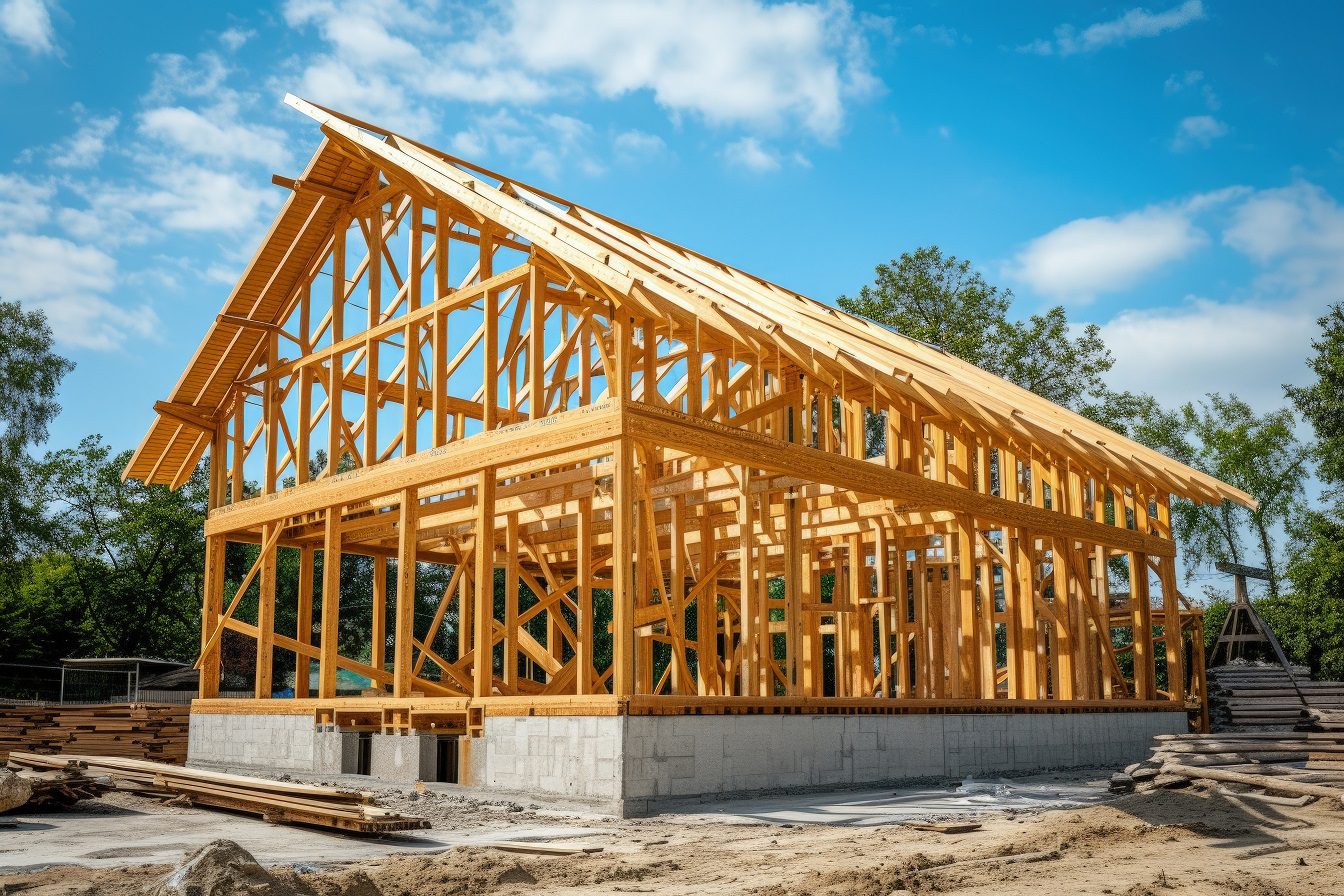
Setting a goal is easy. Achieving the goal is hard.
It’s kind of funny what you remember from your formative years.
It’s also funny what you learned in elementary school, high school, or university that you hold near and dear today.
I had a homeroom teacher in grade seven who changed the way I thought about school, for the better, of course, but whom I can credit for much of my learning moving forward, as well as many of my attributes to this day.
He was different. His methods were different. Everything he did was different, much of which contradicted what we learned previously with other teachers.
He gave us so much freedom, not just of action, but expression, and thought.
Many kids can’t handle this. I almost couldn’t, at first. I was a shit back then. He knew it. I eventually knew it. But about halfway through the year, everything just “clicked” for me.
When I speak of “different methods,” here’s an example: he was the first teacher to ever introduce grading by peers. You’d do a presentation, and while the teacher himself provided a grade, three other kids in the class, whom he called “adjudicators,” would also provide grades. Collectively, you were judged and graded by your teacher as well as your peers.
This would never happen today, of course. I’m sure they’ve done away with grades in public schools entirely. God forbid we provide feedback to children who underperform, that they, well, underperformed, but I digress.
One of the concepts that my teacher introduced to me at the tender age of twelve was that of goal setting.
I had never given a single thought to how I expected to perform in a given subject, in a given school year or semester, nor did I give any thought to how I wanted to perform.
My teacher ensured that we all thought about it, and regularly.
But as I learned throughout the year, setting a goal was one thing, but achieving it was another.
“Anybody can set a goal,” he told me. “But achieving the goal is hard.”
It made sense after it was pointed out to you, but the follow-up question was a real thinker. He asked me, “How do you achieve the goal?”
I had no idea.
I thought we’d simply set a goal, then compare it to the eventual results.
But my teacher taught me that you needed a plan as well, and this is something that so many people lack when setting a goal. You need checks and balances too, as well as performance indicators that are monitored along the way.
In my industry, I see this all the time.
Real estate agents are notorious for setting goals but having absolutely zero idea of how to achieve them.
An agent might offer in January, “I want to sell twenty properties this year.” But what is that based on?
Desire?
It’s not enough.
A goal needs to be rooted in reality; otherwise, it’s beyond desire – it’s fantasy.
When I look at the state of housing in this country, I can’t help but come back to the idea of a “goal” and what that means.
Nothing.
A goal means nothing. That is, it means nothing unless you have a plan on how to achieve it.
For the better part of fifteen years, the “problem” in our housing market was too much demand.
That was the issue, right? That was the reason why prices were increasing, according to the government mouth-pieces and industry onlookers, and thus we saw a slew of regulatory changes aimed at “cooling the market” by removing excess demand.
We can agree or disagree on the definition of “excess,” but it seemed that those in charge planned to stop price acceleration by making it more difficult to buy.
Once upon a time, you could obtain 107% financing on a purchase, if you can believe that. I had a client buy a home in 2006 for $1,000,000, and he was advanced $1,070,000 by the lender, plus his $50,000 deposit back as well.
Some time thereafter, the CMHC mandated (gasp!) a minimum 5% down payment, and this took demand out of the market.
Then the CMHC mandated a 20% down payment on second properties, which was a game-changer for investors.
A few years later, the CMHC introduced a minimum down payment of 20% for purchase prices over $1,000,000, which was another game-changer, and was also supposed to take demand out of the market.
We saw all kinds of other measures introduced by the CMHC, which were aimed at “cooling the market,” from increased CMHC insurance premiums to this little thing called the “stress test.”
But after fifteen years and a dozen policy changes, it became clear that this wasn’t going to work. We discussed this on Toronto Realty Blog for just as many years, and were excited and elated when people finally suggested that we look at supply instead of demand.
The chatter began pre-pandemic, but it wasn’t really until the last federal election that politicians started making promises.
In April of 2025, the three major parties offered these promises with respect to housing:
Liberals – Double the current pace of construction to 500,000 new homes per year in a decade.
Conservatives – A 15% increase in the number of new homes each year, which would double the current pace in five years.
NDP – Three million homes built over the next five years.
My grade seven teacher would go nuts.
Without an actual plan, this is all just fantasy.
The craziest part about this was that the three parties all made these “promises” without actually looking to do anything themselves. All three parties felt that they could “incentivize” the municipalities, who would, in turn, incentivize builders.
Because we’re not actually talking about the government building housing, right? At least, we weren’t yet.
Here were the three respective “plans” released:
Liberals – Provide $4 Billion over four years toward housing-related infrastructure in cities that agree to higher-density housing and faster permit approvals.
Conservatives – Require all cities to increase the number of homes built by 15% each year, and would withhold a portion of federal funding from those municipalities who fall short.
NDP – Double the size of the housing accelerator fund to $8 Billion over four years, make it permanent, and rename it the Canadian Homes Transfer.
Um, okay.
Why wouldn’t the NDP triple the amount? Or quadruple?
These parties didn’t have any plans. These were just words, and the words were being said to get elected. If these parties really wanted to get elected, they should have just come out and promised to build every person in Canada a house, inside of six months, that would only cost $250,000, and which would be paid back with zero percent interest.
The problem with that, however, is that there would still be people who would complain that $250,000 is too much…
And don’t get me wrong, it wasn’t just the federal government (or those running for federal office) who were making promises.
The Ontario government promised to build 1,500,000 homes by 2031 back in 2022 with the ridiculously-named “Build More Homes Faster Act.”
Last week, I was spectacularly unsurprised to see this headline in the media:
“Ontario Appears To Back Away From Goal Of Building 1.5 Million Homes In 10 Years”
CBC News
October 23, 2025
This quote from Municipal Affairs & Housing Minister, Rob Flack, says it all:
“Simply put, it takes too long and it costs too much to build infrastructure and homes in Ontario.”
No kidding?
My grade seven teacher would say, “Setting goals is easy. Achieving goals is hard.”
To be fair, Mr. Flack wasn’t offering this as an excuse as to why homes aren’t being built faster, but rather offered this as he lamented what we already know, and introduced legislation aimed at streamlining approvals.
But the problem with homebuilding can be found in this excerpt from the article:
“This legislation continues to build on the work we have done previously to create the conditions (for) homebuilders to do what they do best and that is to build.”
But when asked if it would spur the industry enough to allow the province to reach its 1.5 million home goal, Flack was noncommittal.
“I’m committed to getting shovels in the ground faster,” he said. “I’m looking at the next six to 12 months to get this thing kick started. The future will be the future. We’re in a housing crisis. We get it.”
See the problem?
The municipal, provincial, and federal governments are all relying on homebuilders to build homes.
As they should, of course, and we’ll come back to the ridiculous idea of Mark Carney building houses in a moment.
But the problem with the “plans” introduced by every party, from every level of government, is that they’re trying to “create conditions” that allow homebuilders to build. That’s it. That’s their plan.
My grade seven teacher would wonder how one could set a personal goal while entirely relying on another person to achieve it.
More from the article:
Homebuilders have said that some of the most helpful measures governments could take to encourage development would be to reduce taxes and fees.
Measures in Flack’s legislation include prohibiting the city of Toronto from requiring green roofs and taking aim at other so-called green standards, speeding up the establishment of transit-oriented communities, allowing some minor variances as of right and facilitating faster minister’s zoning orders, which allow normal planning processes to be circumvented.
Prohibiting the city from requiring green standards?
Finally, a great idea! Disagree with me at your peril, but we’re having enough trouble building housing as it is, so now isn’t the time to start tying other goals and policies into homebuilding, especially when they complicate the process and increase the cost.
I also read this article last week:
“Backlog of 1.2 Million Planned Homes In Toronto-Hamilton Not Being Built: Report”
National Post
October 21st, 2025
This one is also from the files of “no surprise here.”
But this article, however, talks about how houses that are already approved are not being built.
From the article:
For every house being built in Canada’s largest metropolitan area, a new report says, there are 12 that have all of the necessary approvals but no shovels in the ground, which amounts to a backlog of about 1.2-million homes in that area alone.
The report, to be released Tuesday by cross-sectoral group CivicAction, says that backlog in the Greater Toronto and Hamilton Area (GHTA) and across the country is a major factor in Canada’s housing crisis.
The gulf between the planned homes and those actually getting built, CivicAction says, is a result of a wide variety of structural bottlenecks, including: municipal planning departments are designed for building levels of the past, not what is needed today; financing models favour high-priced developments, not the homes that middle-class Canadians can afford; and skills shortages in the construction industry.
So the approvals are a problem, but also, they’re not?
The additional problems now are price and the lack of appropriate labour needed?
Just add that to the growing pile of reasons.
So is now the time for the government to go into the home-building business?
Recall this press release from last month:
Prime Minister Carney Launches Build Canada Homes To Supercharge Homebuilding Across The Country
September 14th, 2025
I know that people desperately want to think that their elected government body not only has their best interests at heart, but also knows how to best go about achieving them, but putting the government in charge of home building is a disaster waiting to happen.
Just read this excerpt:
Build Canada Homes will place an intense focus on using cost-efficient and modern methods of construction such as factory-built, modular, and mass timber. Through bulk procurement and long-term financing, Build Canada Homes will mainstream these advanced methods of construction – with the potential to cut building timelines by up to 50%, reduce costs by as much as 20%, and lower emissions by approximately 20% during construction. To supplement these efforts, wherever possible, Build Canada Homes will prioritize low-carbon materials, low-carbon technologies, and efficient design. This will help catalyze a new housing industry – one that builds faster, and more sustainably, 365 days a year.
Does anybody believe this?
Since when does the public sector reduce costs? Everything costs more when it’s run through the pockets of the government first.
This is absolute fantasy, and at a cost of $13 Billion, which apparently is for 4,000 homes.
Now, much has been made of the math here!
Some people are saying that the $13 Billion is for 4,000 homes, which means we’re spending $3.25 Million per home, but others are defending the federal government and saying that the two figures are not linked. If that’s the case, then I’d love to know: (a) the cost to build each of these of homes is, (b) what else the $13 Billion is going towards.
If you follow the Fraser Institute, then you might have already seen this, but it’s worth a read:
“Federal Government Wants To Build 4,000 Homes Despite Years Of Real Estate Mismanagement”
Fraser Institute
September 26th, 2025
From the article:
Prime Minister Mark Carney recently launched his new “Build Canada Homes” federal agency, which will help build “4,000 factory-built homes” at an initial cost of $13 billion. In light of the affordability crisis that’s plagued large swaths of the country, many Canadians likely welcome more government involvement in the housing sector. But does Ottawa have the ability to efficiently and effectively build homes?
To help answer that question, it’s helpful to consider the federal government’s real estate record. Most Canadians probably aren’t aware that the government owns a bloated portfolio of underused office space, yet efforts to shrink this portfolio have moved at a glacial pace. In 2017, the government acknowledged that half of its office space was underused. But it took until 2019 to formulate a plan to sell off these properties, and by 2023 the federal office footprint (managed by the Department of Public Services and Procurement) was barely reduced—from 6.0 million to 5.9 million square metres.
In light of this failure, the government in 2024 dedicated $1.1 billion in taxpayer money, over 10 years, to hasten the sale of underused federal properties and save taxpayers $3.9 billion in the first decade and $0.9 billion annually thereafter.
Unfortunately, this initiative is already failing. The original goal was to cut the federal office footprint by 50 per cent by 2034, but the government’s current projections envision only a 33 per cent reduction. That means taxpayers will shoulder the cost of maintaining more underused office space each year. And even after a decade and $1.1 billion spent, Ottawa will still be left with roughly one million square metres of idle federal office space.
Why?
According to an auditor general report released in 2025, the federal government lacks even basic data on its own real estate portfolio, routinely misses internal targets for consolidation, and continues to rely on a lengthy process that takes six to eight years to offload surplus buildings. Poor cooperation between federal departments has made matters worse. Nearly half of the largest departments have refused to sign space-reduction agreements, especially those that paid no rent and therefore had no clear financial incentive to give up empty offices.
These failures raise a key question: If the federal government cannot efficiently downsize its own office footprint—despite ample funding and years of effort—how can it credibly promise to deliver complex housing projects?
Which takes us back to the Carney government’s new federal agency, Build Canada Homes (BCH), which plans to develop affordable housing and accelerate housing innovation. But BCH will likely face the same pitfalls that plagued Ottawa’s real estate downsizing effort—namely, poor coordination across the government, competing political priorities, and no real pressure to deliver.
The plan for BCH relies on federal departments to work smoothly with each other, the provinces, municipalities, Indigenous governments and the private sector. BCH is already weighed down by competing mandates. It promises to develop more affordable homes, but only if they’re built with Canadian-made and climate-friendly materials. These goals are at odds. If a product requires a government mandate to be used, it’s not the most cost-effective option.
And taxpayers will give BCH $3.5 billion a year without any clear indication of what we’ll get in return. BCH’s plan promises “significant” numbers of “affordable” homes—with no indication of how the government will measure progress or affordability. How will Canadians know whether the program is on track? Or if it provides good value for tax dollars? These are fundamental questions, especially since there’s a clear risk that BCH spending may simply compete with private-sector development rather than add greatly to the overall stock of houses.
The stakes are high. If Build Canada Homes underperforms, Canadians could be left with few new homes and a considerable bill. Ottawa cannot efficiently downsize its own office footprint despite ample funding and years of effort. That record hardly inspires confidence in its promise to deliver complex housing projects across the country.
This stinks.
And even worse is that we’re still watching politicians talk out of both sides of their mouths with respect to home prices, as seen here:
“Average Home Price Must Fall In Canada To Restore Affordability”
Toronto Star
October 20th, 2025
Explain this to me:
“The average price of housing – not necessarily individual home values, must fall to restore affordability in Canada.”
Ah, I see what you did there.
You’re trying to appeal to both existing homeowners, who don’t want their home values to fall, as well as appeal to would-be home buyers, who want lower prices.
Oh, politics!
Is it any wonder why we can’t actually get anything done around here?
So who is it, folks? Who’s going to build housing?
Is it the government or is it the folks who are actually in the business of building homes?
It’s clear that our goals aren’t going to be met on this one, but we should have known that coming into this one.
Perhaps the next time our government wants to promise something they can’t deliver, over which they have no control, they can put a little research into the viability of their goal first.
That would have satisfied my grade seven teacher, so it should be good enough for 42 Million Canadians…
























Serge
at 8:49 am
It is not also clear, why to build millions of new houses in a country with declining population. Most demand in last few years was from investors.
Anwar
at 10:50 am
David, how come only one post last week? Inquiring minds want to know! 😂
David Fleming
at 11:11 am
@ Anwar
Life. 🤷♂️
Ace Goodheart
at 12:03 pm
Progress reports for kids in the TDSB come out Thurs Nov 14th.
Yes they still use letter grades.
David should know this, he has kids in school.
As for housing, here is a thought for all of you to digest:
When you take out a mortgage, it has a “fake” amortization period, which results in a much lower monthly payment.
The loan is amortized over a 25 year period.
It is actually due in full in five years.
So why the fake 25 year term?
Well, if you are a bank, you front end load the interest.
You fake a repayment term (25 years) and then you can collect impossible interest on a loan that is due in full in five years.
Then when it renews, you just do it again.
High home prices could be said to be created entirely by a bank accounting trick.
Inflate the value of your mortgage portfolio by writing impossible to repay five year loans, front end load the interest, and then renegotiate the loans every five years.
It is actually illegal to do this in the USA (this is why a mansion in Texas costs the same as a small semi in Toronto).
If you really want to crash real estate prices, get rid of notional (ie fake) amortization periods.
The buyer of the house must be able, on a payment plan, to repay the entire mortgage by the end of its five year term.
Watch what happens.
Why do banks like fake 25 year terms?
I think I explained that. They can front end load huge interest payments on un-repayable loans, and they can use junk debt to inflate the value of their mortgage portfolios, thus increasing share value and credit worthiness
As I said, in Donald Trump’s America, where anything goes, this is illegal.
Why do we allow it here?
Marina
at 9:32 am
OK, please do NOT spread misinformation on how mortgages work. Interest is not “front-loaded” and it scares me how many people still believe that.
Interest in the beginning is bigger because you owe more money. As you pay down the principal, interest goes down because you owe less.
Ace Goodheart
at 12:48 pm
That would be a bank’s argument (or a mortgage broker’s).
In reality, the mortgage loan is a fixed sum of money, loaned with a fixed number amount for interest (subject to changes in the BoC rate if it is a variable rate mortgage).
Interest on the loan for its term will be a certain number, which is divided up into monthly interest payments throughout the loan term.
You pay way, way more at the beginning of the loan, than you do at the end. That is called “front end loading” of the loan interest.
It is also possible to structure a loan so that the interest is the same throughout the term of the loan. However, that is not possible if you are renewing a 25 year loan every five years, because you do not know how much interest will actually be owing over the 25 year “notional (ie fake) amortization term.
We have had these loans for so long, structured like this, that when a person like me points out that this is a ridiculous way of structuring a loan, and that this is inherently inflationary, as it front end loads interest onto initial payments, rather than spreading it out over a long period of time, and also artificially inflates home prices, as people are able to borrow astronomical amounts of money which they have no ability to repay over the actual five year term of the loan, I am routinely told “that is not true, stop with the misinformation!”
Think about this for a second. You have a five year loan, repayable over a 25 year term. How is that even possible? It’s due in full in five years, not 25. The interest payable over the “fake” 25 year term is a joke. No one can calculate that. They are lying to you. No one knows how much interest you will actually pay. The rate resets every five years.
If they did these things properly, you would have either a five year term with a full repayment at the end of the term, or a 25 year term with a full repayment after the end of the 25 year term. You could structure the interest any way you liked, pay it mostly up front at the start of the loan, or in equal instalments, knowing how much interest you actually owe for the entire loan term.
If we sold cars like this, someone would report it to some consumer protection agency or something. It would be deemed illegal as the total interest payable on the loan is a complete fantasy.
Marina
at 1:01 pm
Again, you are paying interest on the amount you owe, and you owe less later. Paying the same amount of interest is not a thing.
Suppose there is no bank. You have to get a loan from Johnny Loanshark down at the pool hall. You need 100K and he will loan it to you for one year at 5%.
However, you don’t make that much money so at the end of the year you only have $10k. And you owe 105. So you go to Danny Loanshark and get the remaining 95K, also at 5%.
Now next year, you owe 99,750, but you again have 10K. So off you go to loan shark #3 to get 89,750.
Yes each year you are paying less and less interest, but nobody is front loading anything. The bank simply takes that mechanism and spreads it out on a monthly basis. At the end of the 5 year loan, the loan resets.
Another way of putting it is this. If you take out a 5 year loan at 25 year amortization and in 5 years you refinance at the same rate but 20 year amortization, NOTHING will change – same payments, same date you will pay it off.
Nobody is front loading anything.
Ace Goodheart
at 2:37 pm
And yet, they are front end loading it.
There are all sorts of different ways of paying interest. You see this with commercial loans. Just so long as the loan has a fixed term and a fixed interest rate for that term, you can structure the interest payments any way you like.
However, if the total amount of interest that will be paid on the loan, cannot be calculated using any reliable method, the only way to structure it is to have the most interest paid at the commencement of the loan, and hardly anything paid at the loan’s maturity. That is done for the simple reason that it is not possible to calculate the total amount of interest owing, at any time during the life cycle of the loan.
If you had a 25 year mortgage, and it had a 6% interest rate, then you could calculate the total amount of interest payable over the 25 year term.
You could then have that interest paid any way that you and the lender agree on.
If you have a five year loan with a 25 year amortization period, and a 4% interest rate, it is impossible to calculate how much interest will actually be paid over the entire 25 year term. You only have one method of payment of interest, and that is to front end load it onto the payments. By the end of the 25 year term, there is hardly any interest being paid at all. It is all paid at the beginning.
Marina
at 3:25 pm
No lender would EVER agree to pay the same amount of interest over the 25 years.
That is not a thing anywhere on earth.
If you take out a 25 year loan, the terms of the loan are 25 years, but you still pay the interest you owe on the loan for that month (or year), and the amount of interest you pay will go down over time.
It’s simple math and I challenge you to find me a US mortgage over 25 years where you calculate the total interest and spread it out over the term of the loan. Link please.
I would need to see an amortization schedule showing that after half the time you have paid off half the interest and own half the house. Because anything else would be front loading right?
I’ll wait.
Ace Goodheart
at 4:02 pm
Exactly. It’s impossible. No lender would ever agree to do that.
Which is why, if you want to lower house prices in Canada, you need to do two things:
1. Get rid of notional amortization periods. A five year mortgsge loan must have an interest and principal payment schedule that allows it to be paid, in full, in five years.
2. Allow the borrower to negotiate how the interest is paid. It can be paid mostly up front (like it is now) or spread out evenly over the term of the loan.
Do those two things, and you will immediately lower house prices by 50% or more.
Instead, we have folks like the young communists of British Columbia (generation squeeze) wanting to tax people’s houses away from them and give them to the government (which won’t help at all).
The secret to controlling price appreciation is to control how money is borrowed.
Marina
at 10:04 pm
Omg I give up. Your proposal is just as delusional as the hippies who want to tax people out of their homes.
What lender anywhere on earth has ever agreed to negotiate for a client to “pay the interest later”? Ever?
Why don’t we mandate for the lender to just charge zero interest? Or buy you a puppy?
I’m all for new ideas but they have to be realistic. Otherwise let’s all get free houses by the beach! There I solved the housing crisis.
Ace Goodheart
at 1:06 pm
Saying this another way (so I maybe make sense) – is there any reliable method of calculating the total dollar amount of interest you will pay over the entire notional term of a 25 year residential mortgage in Canada?
I would suggest there is not.
You are signing up to pay an unlimited total dollar amount in interest.
This goes against every consumer protection argument ever made. And yet, when you buy a house in Canada, with a loan, you are required to do this.
This more than any other thing, causes house price inflation.
This is why after you finally pay off your mortgage in 25 or 30 years, the house has astronomically increased in value.
Marina
at 1:20 pm
This is a completely different argument, and there is a lot of validity to pushing for full term interest rates.
But ti be clear, in the US if you buy a house on a 30-year term, after 15 years you will have paid way more than half the interest and own way less than half the house. Same as in Canada. And in no country is it front loading.
The argument around short term vs long term rates is a different beast. But short term rates do have a couple of benefits. Rates in the US never went as low as they did here because you have to hedge against long term rates. And refinancing is hella expensive because again you have to comp against 30 years or however long of potential profit loss. Plus portability is more expensive. But there may be a valid argument that the Canadian version is more inflationary. I’ll think on that some more.
Ace Goodheart
at 2:40 pm
Exactly.
If you want to reduce house prices, if you really want to do that, what you do is change the way home loans are structured.
Either have the five year mortgage with a payment plan that allows it to be completely paid off after five years, with interest.
Or have a 25 year loan with a set interest rate payable over 25 years.
Then structure the interest any way you like.
If either of those two things were done in Canada, what would happen is house prices would be immediately reduced by probably more than half.
No one can pay off a million dollar mortgage, with interest, in five years.
And no bank is going to loan someone a million dollars for a low interest rate over a 25 year term.
So that would be the end of million dollar houses. They simply could not exist, because no one could buy them.
How you loan the money, determines how much the asset will cost.
Ace Goodheart
at 3:04 pm
You don’t need to give up.
Just look at the situation differently.
When is the interest due?
When the loan matures? On an ongoing basis? All at once, at the beginning?
For a mortgage, it is due mostly at the beginning.
For a GIC, you get the interest at the end of the five year term, along with your principal repaid, in full.
If you have a bond, there are many different ways interest can be paid. Some don’t pay until the end of the term. Some pay ongoing.
So why are mortgages all done the same way?
The answer is, it’s impossible to calculate the total amount owing for the 25 year term.
LucasT
at 12:04 pm
To Marina and AceGoodheart.
Both of you fail to mention that if you transition your payments to BI WEEKLY that you cut your Principal AND Interest payment schedule by 25% (18 years instead of 25, depending on interest and market conditions). This proves that mortgages are NOT front loaded. If you pay back your principal faster, the amount of interest cost is reduced. Some banks will allow (gift) borrowers to make 1 extra payment per year if their contract is Monthly only. The Bi Weekly payment scenario is equivalent to a (negative) reverse- compound interest growth.
Misha
at 3:13 pm
Won’t be commenting on the mortgages themselves, but the system has existed for long enough that it cannot explain the difference in prices from the US – it was much smaller not that long ago.
Many large metro areas in the US are much more expensive than Toronto – maybe not relative to incomes, but definitely in absolute terms.
Also, Texas is unusual even in the US, with relatively affordable cities that have lots of high-paying jobs. A rare and remarkable combination anywhere in the world.
Sasha R
at 3:14 pm
I’m wondering how any of this solves the cost of LAND which is the majority of the expense. I know I can build a SMALL home for $500,000 but it’s pretty difficult to get a lot anywhere in the GTA for less than $500,000, so it’s cost prohibitive.
Also, regulations on building are still too restrictive. My parents would build an ADU on their 4-acre property but because the Niagara Escarpment Commission and Credit Valley Conservation Authority have jurisdiction they trump the municipal and federal programs that incentivize ADUs and in-law suites.
Ace Goodheart
at 5:30 pm
You found land in the GTA for 500k?
Where?
I recently tried to purchase a small laneway lot (about the size of a double garage). I had them almost willing to sell to me for 400k then they changed their minds. An entire building lot for 500k is quite the deal.
Sasha R
at 12:32 am
Fair enough…my point still stands…crappy. 🤷♀️
DAF
at 10:09 pm
I had a Grade Six teacher – Mrs. Anderson – who taught us critical thinking! What a concept at that age…but it stuck with me, all my life.
Derek
at 11:39 am
doom and gloom per the star: “Average detached home prices have fallen about 25 per cent (to $1,355,506) and semis 24 per cent to ($1,033,770) since February 2022.”
TOPlanner
at 3:11 pm
Removing green building standards will cost taxpayers more over time in stormwater management and other environmental costs (e.g. increased cooling costs during hot weather, etc.) than whatever savings that developers and builders decide to pass on. It is short-sighted, and designed to save Doug’s buddies in the development and construction industries some money.
Yes, we’re in a housing crisis. But it is not, or should not be about adding units at all costs. We have to consider the kind of cities and towns that will be resilient, sustainable places to live for the next 50-100 years.
Marina
at 3:26 pm
David, seriously, can you do a blog post with one of your mortgage buddies explaining how mortgages work?
I swear I get triggered by the “front-loading” conversation.
This is a serious problem.