
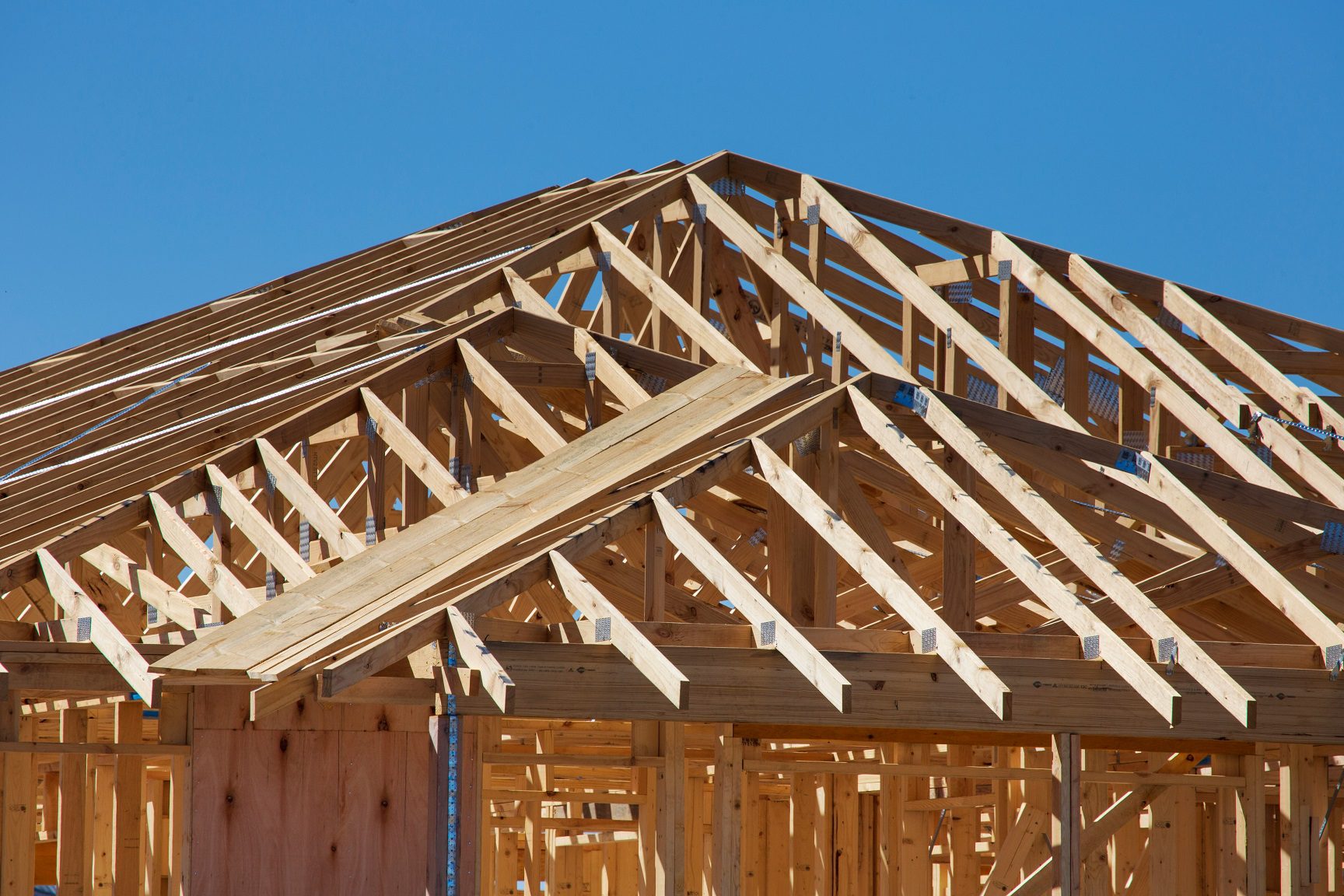
Did you know that there is HST on the price of a new home?
You might have. You probably did.
But a lot of people out there would consider it unfathomable that a whopping 13% is charged on something so expensive.
You might not “feel” the tax when you’re buying a bag of chips. The 13% tax might not “seem” life-altering when you’re purchasing your weekly groceries.
But if you picked up a house and brought it to the cashier, watched them ring in the $999,900 price tag, add thirteen percent, and then say, “That’ll be $1,300,000, please,” you would most certainly feel that.
For the longest time, taxes were buried in the purchase price of a new house or condo, and thus, buyers’ heads were buried in the sand.
It’s not like you buy a resale home with a sticker price of $2,000,000 and then pay $2,260,000 in total, right?
So when you buy a new home for the posted price, and you pay that posted price, you don’t really realize that this price is provided to you after the HST has been included.
“Included In.”
That’s the key phrase. The HST is “included in” the purchase price.
Do the mental math here, and what we’re saying is simple:
If there were no HST on the purchase of new homes, they’d all cost thirteen percent less!
Approximately, of course, since the calculation is not straightforward.
And in theory, of course, since I’m not convinced that developers would give up the whole thirteen percent, but that’s a topic for later…
I’ve been writing about the intersection of taxes and real estate here on Toronto Realty Blog for many years. Who could possibly forget my magnum opus on the subject in late 2024:
“The Increasing Tax Burden On New Ontario Homes”
This blog post finally put an actual number to the amount of tax included in the cost of a new home: 36%.
That’s how much of the cost of a new home is made up of some sort of tax.
All this is to suggest that if there were no taxes in the cost of a new $1,000,000 home, it would cost the buyer $640,000.
For many years, I’ve been calling on the City of Toronto to reduce their absurd development charges on new construction, as well as for the provincial and federal governments to back out PST, GST; collectively known as HST.
As with all things government, they only did so after it was too late to have an effect.
Last month, our collective governments announced their plans to “reduce” the HST paid on new homes in Ontario.
“Buying A New Build Home? Say Bye To The HST”
BNN Bloomberg
March 30, 2026
From the article:
A new deal between the Ontario and federal governments could soon see the cost of a new home in Ontario drop by up to $130,000.
As of April 1, eligible buyers in Ontario will no longer have to pay 13 per cent HST on new homes valued at up to $1 million dollars, for a maximum rebate of up to $130,000. Those choosing to purchase a newly constructed home valued between $1 million and $1.5 million will be eligible for a maximum rebate of $130,000. Buyers of new construction homes valued at $1.85 million or above will be eligible for a $24,000 rebate.
Speaking in Toronto on Monday, Prime Minister Mark Carney said the partnership with the Ontario government will provide almost $2.2 billion in total tax savings for Ontarians and “catalyze” home building.
“It will catalyze an additional 8,000 housing starts in Ontario next year – supporting up to 21,000 jobs in the skilled trades and boosting Ontario’s GDP growth by $2.7 billion,” Carney said.
The tax relief measure will take effect on April 1, 2026, and expire on March 31, 2027. It is unclear whether anyone who signed a contract for a new build before April 1. will be eligible for any financial relief.
The cynic inside me simply must note that providing $2.2 Billion in “savings” for Ontarians only means that the government will have to make up this revenue elsewhere, through increasing existing taxes or creating new ones, but most people don’t want to know that, let alone discuss it.
But that $2.2 Billion figure is light!
Just look at this headline:
“Ford, Carney Announce $8.8 Billion To Help Cut Development Charges, Spur Housing Builds In Ontario”
CBC News
March 30, 2026
From the article:
Ontario and Ottawa will spend billions to help cut municipal housing development charges in an effort to spur new builds across the province, Prime Minister Mark Carney and Premier Doug Ford announced Monday.
The federal and provincial governments will each spend $4.4 billion on housing-related infrastructure over the next 10 years, Carney announced alongside Ford and Toronto Mayor Olivia Chow at a joint news conference in Etobicoke.
The deal will cut development charges in half for three years, Carney said. Development charges are used by municipalities to pay for infrastructure that supports housing, like roads, sewers and water.
Experts warn municipal development fees have inflated the cost of homebuilding in recent years, making it harder to build much-needed supply, something Carney echoed Monday.
“They’ve been growing at an unsustainable rate, increasing the cost of every new home, compressing margins for builders, and they’ve been stalling new builds, stalling construction,” Carney said.
The majority of the $8.8 billion in funding is intended to help cover infrastructure costs for municipalities that lower development charges, Carney said, though municipalities will also be expected to help pay for the cost of reductions.
Two points to note here:
1) I was right. For the love of God, I cannot believe we’re only talking about development charges now.
2) We have to now make up $8.8 Billion elsewhere, unless our governments are going to massively cut spending and handouts, which they won’t.
If the federal and provincial governments are going to transfer $8.8 Billion to the municipalities to cover development charges, fine. I hear that.
But the HST rebate?
I’m not so sure about this one…
The way I see it, there are three reasons that the government could be implementing this new policy:
1) To stimulate new home sales.
2) To make housing more affordable.
3) To stand in front of a podium and act like there’s a plan, when there really isn’t.
Because if a tree falls in the woods and nobody is around to hear it, it doesn’t really make a sound, right?
What is happening with new home sales right now?
Well, new condo sales in 2025 were down 60% from 2024.
In fact, new condo sales in 2025 were down 95% from 2021.
Or put it this way: new condo sales in 2025 were down 91% from the ten-year moving average.
Or last, but not least, try this one on for size: new condo sales in 2025 were the lowest since 1991.
That’s why a headline like this is quite prudent:
“Tax And Fee Cuts Have Home Developers Itching To Build. All They Need Now Are Buyers”
Financial Post
March 31, 2026
From the article:
One caveat could be the high-rise condominium market in the Greater Toronto Area may have so much inventory that a fee reduction will do very little to spur new projects.
“There is accumulated inventory, and then there is even more being delivered this year, and even with these changes, a standing inventory unit will still be cheaper than a new build unit,” said Waters.
What good is a 13% reduction on the price of a new build if nobody is buying new builds?
We’re looking so hard for optimism in this sector, but it’s hard to find it.
Check out this headline:
“GTA New Home Sales Increase Slightly In February, But Momentum Could Build With Expanded HST Rebate”
Toronto Star
March 30, 2026
From the article:
There were 531 new home sales in February — up 16 per cent from February 2025 but 76 per cent below the 10-year average for the GTA. Historically, new home sales for a typical February in the GTA would be 2,251 units.
Then again, from newspaper to newspaper, the optimism varies.
“GST Rebate For First-Time Buyers Of New Homes Won’t Revive Struggling Condo Sector, Builders Say”
Globe & Mail
March 24, 2026
This is pretty much the opposite of what’s posted above, is it not?
From the article:
“It is not going to help the condo business at all,” said Jeff Paikin, president and co-founder of New Horizon Development Group, which has been building homes in Southern Ontario for more than three decades.
A main reason for that is because first-time buyers are not the primary purchasers of preconstruction condos, which are mostly sold to investors.
This is key because developers typically need to sell about 70 per cent of their units before a lender will provide the financing to start construction.
“Can I get two-thirds of that building sold out with first-timers?” said Steve Stipsits, president and owner of Branthaven Homes, which has been building homes in Southern Ontario for more than 50 years. “In my experience, that’s just never gonna happen,” he said.
Mr. Paikin agreed. “That’s just an unrealistic expectation in the marketplace today,” he said.
They both estimate that first-time buyers accounted for less than 5 per cent of their overall sales before the downturn.
Investors were the ones buying pre-construction condos?
You don’t say!
So again, I ask: is the HST rebate actually going to have an effect?
There’s a lot of “bluster” to sort through, and from newspaper to newpsaper, or economist to economist, we’re hearing all sorts of different things.
One rather interesting take was that of Mike Moffat, the founding director of the Missing Middle Initiative.
Quoted in this BNN Bloomberg article:
“How Might A New Deal On Housing Help Middle Class Canadians?”
CTV News
March 31, 2026
From the article:
Mike Moffatt, founding director of the Missing Middle Initiative, told CTV News Channel on Monday that the new changes are going to bring the housing targets for the province and the federal government a “lot closer.”
“Now this is only a temporary measure, so we need to have more structural changes … but anything to make housing construction more affordable, particularly for middle-class families, is sorely needed,” Moffatt said.
Moffatt said that although this change is not going to “fully” get the federal and provincial governments to their targets, it’s an important measure.
“The CMHC predicts that housing stats across Canada will fall each of the next three years, despite the fact that the federal government needs them to double,” Moffatt said.
When asked whether he thinks this new investment could end up becoming a bail-out for some of the developers, like in certain municipalities that have raised development fees, Moffatt said if builders and developers are “just sitting around,” they won’t be able to access the funds.
“This helps lower the cost of construction, because development charges are, at the end of the day, a construction tax, and help smaller homes get built,” he said.
This is what it’s all about, right? Getting homes built?
My physiotherapist told me last week, “I think this is all about Doug Ford helping his developer buddies get richer.”
That sounded like a radio ad from the Liberal government to me, but this sentiment is out there.
Whether you like it or not, if the province is going to build more homes, at some point, developers will need to (gasp!) be able to make money.
Let’s not forget, we had some very lofty goals for homebuilding in this province, and as Mike Moffat noted above, we’re way, way behind!
At least some folks are taking notice:
“Ontario’s Goal Of 1.5 Million More Homes By 2031 Is Further Off Than Ever. It’s Not Fazed”
CBC News
March 27, 2026
Ontario’s housing start projections have been revised downward once again in the province’s budget, putting the government even farther off track from building 1.5 million homes over 10 years — a target to which the ministers in charge say they pay no mind.
The province is projecting just 64,800 housing starts this year — 10,000 fewer than it expected for this year in last year’s budget and 30,000 fewer than the 2024 plan projected.
The government’s own math early on in its bid to get 1.5 million homes built by 2031 showed that housing starts should be at 175,000 per year. That was a different time, said Municipal Affairs and Housing Minister Rob Flack.
“It was a goal set in 2022 when we had robust housing starts,” he said Thursday after the budget was tabled. “We don’t today.”
Of course their not fazed!
Politicians are never held accountable for their decisions, actions, or the results of both.
I slammed every promise, projection, and program as they pertained to the construction of new housing in this country, and it wasn’t because I was cynical; it was because I have eyes…
Bottom line: I think it’s great that the government has provided a one-year rebate on the HST of new homes under $1,000,000, but this isn’t going to move the needle on housing. I wish it were. I wish it would.
Not only that, the idea that this is going to “spur housing construction” is based on nothing but hope.
There’s zero evidence to suggest this is accurate.
Remember this line from Mark Carney:
“It will catalyze an additional 8,000 housing starts in Ontario next year – supporting up to 21,000 jobs in the skilled trades and boosting Ontario’s GDP growth by $2.7 billion.”
Really?
Says who?
Says you?
This HST rebate on new homes, which nobody is buying, is going to “catalyze” an additional 8,000 housing starts?
It’s going to “support” up to 21,000 jobs?
Does that mean “create,” or is this just wordplay?
And “boosting” Ontario’s GDP growth by $2.7 Billion.
Really?
Based on what? Who’s projecting this, why, and how?
There will be equally as much uproar about the inaccuracy of these numbers as there was about the provincial government promising to build 1.5 Million new homes in the next ten years.
Sorry, folks. I didn’t mean to be negative today. I mean, after all, Rory Mcllroy just won back-to-back green jackets! We’re all in a good mood, right?
It’s just that when I see governments grandstanding, I get frustrated.
If you think I’m wrong, I’m happy to hear you out.
Just make sure you promise to follow new housing starts on a monthly basis, starting with the month of April.
Let’s see how “catalyzed” the new housing market is with this HST announcement, shall we?





















Shawn
at 8:04 am
Hey David. Just asking but wouldn’t 13% on top of 999,000 bring price to 1,128,870?
Thanks
Shawn
David Fleming
at 9:10 am
@ Shawn
Yes, that was a typo! 🙂
Thank you!
anonymous
at 9:01 am
Prior to the recent change to HST on a new home purchase, a buyer did not really pay 13% HST. Assume a developer buys land for $500,000 plus HST, incurs constructions cost of $450,000 + HST and sells the house for $1,000,000 plus HST. The net HST the government receives is $6,500. But after the $24,000 HST provincial rebate, the buyer actually saved $18,000.
Another way to look at it is the HST is a value added tax. The developer made $50,000 profit (added value) which at 13% is $6,500.
Sirgruper
at 9:19 am
It will help on the margins. Townhomes in the burbs that are stick construction were close to break even and those developers who need to feed the machine will start and there are end users for that project type. GTA condos. Not a chance.
Derek
at 9:34 am
Personally, I wish the political parties I hate would never adapt, change leaders, regress to the centre from the margins, or accept ideas and positions from other duly elected politicians.
Ace Goodheart
at 1:48 pm
If you run a business, you know that HST rebates are a complex mess.
Your business paid HST on input costs, which you can then deduct as input credits from your HST collected and payable.
But if you are required to refund the entire amount collected to the consumer, what do you do with your input credits?
Are they refunded too?
They did this before and it was a paperwork nightmare for businesses. I expect this to be similarly brutal
Serge
at 2:16 pm
“It’s just that when I see governments grandstanding, I get frustrated.”
It only says that you are waaaay toooooo young, David.
You still have a helluva unspent energy, emotions, illusions 🙂
Wait another ten years.
Patty
at 12:11 pm
So the feds are chipping in billions of dollars to cover HST and development charges in Ontario? Well, I don’t live in Ontario. Why should myself and taxpayers across Canada subsidize Ontario and the GTA specifically? Every Canadian is being overtaxed by governments and paying more for everything. We need some proper, common sense planning and policies that assist all Canadians!
David Fleming
at 6:38 pm
@ Patty
I don’t disagree.
Great article in the National Post today…
https://nationalpost.com/opinion/carson-jerema-how-justin-trudeau-cost-canada-1-trillion
Anu Arora
at 12:05 pm
Good insight and analysis of all news!