
I’m nothing, if not nostalgic.
Those closest to me are fully aware of this, whether it’s because I collect 1920’s hockey memorabilia, or because I’m always reminiscing about “back in the day,” or because I know zero about architecture but still love it; many of my passions involve people, places, or things from yesteryear.
It should come as no surprise that I have a folder on my computer called “Vintage Real Estate Ads.”
I love these. I can’t get enough of them.
In July, I wrote a blog post about how real estate was sold in the 1980’s and 1990’s, showing physical paper listings from the 1980’s before the Internet, as well as some newspaper advertisements from 1997.
July 9th, 2026: “How Was Toronto Real Estate Sold In The 1980’s & 1990’s?”
That was a fun post, but I think today’s will be better, and most certainly more visually appealing.
I would be remiss, however, if I didn’t first provide those interested with another important link:
April 18th, 2018: “Turn Back The Clocks: Toronto Real Estate In 1914”
This is one of my favourite all-time blog posts, and that’s choosing from 3,000+.
I just love looking back over a century, not only to see what the houses looked like, what they sold for, and how they were marketed, but because sometimes, we have to remind ourselves that while one hundred years is a long time, these were fully functioning societies just like ours. No internet, but otherwise, just like ours!
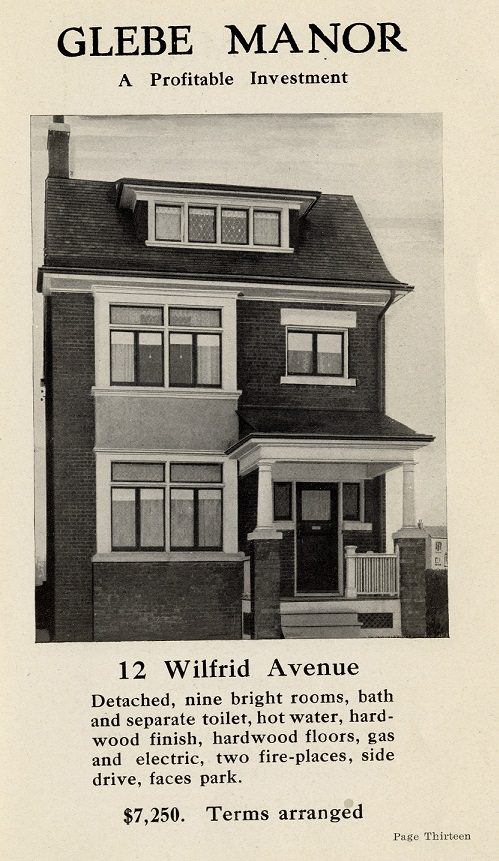
In this blog post, I shared a full booklet of Davisville Village homes that were part of a development called “Glebe Manor.”
Here’s one:
Wild eh?
A mere $7,250 at the time!
What I find interesting is how it was marketed back then.
“Nine bright rooms,” the ad says. Today, we might refer to bedrooms, but not the total number of rooms.
“Separate toilet,” of course, which was important back then, but also “hot water.”
Now, I wrote this blog post back in 2014, and that was well before the house came up for sale and promptly sold after four days, as follows:
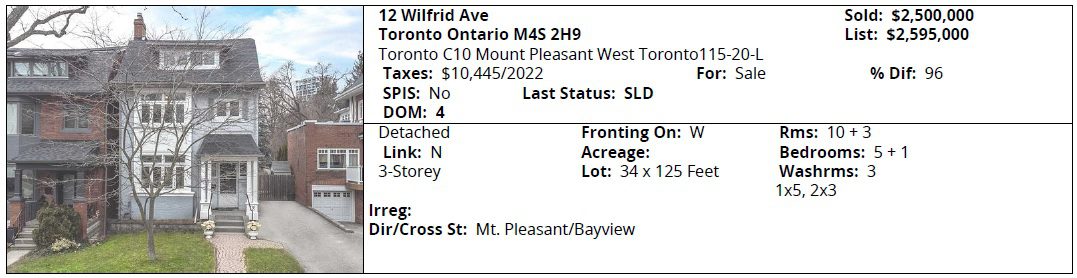
This was in February of 2023, and this is a prime example of why I love looking back at history.
What’s that saying: looking back is depression, looking forward is anxiety?
Nah.
I just think it’s super cool to look at Toronto’s real estate history, especially from the standpoint of real estate advertising.
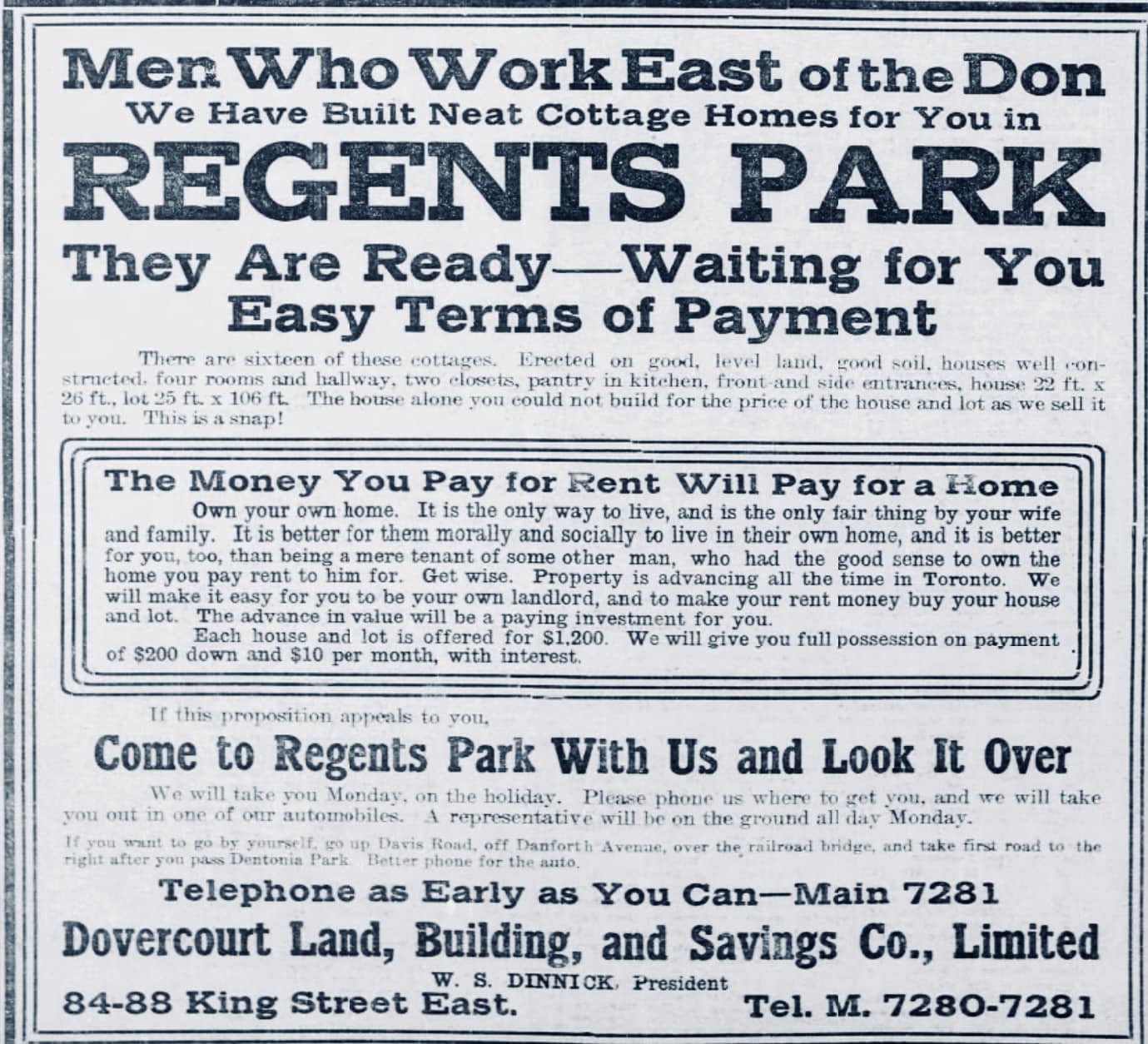
Perhaps the coolest ad I’ve got in my archives is this one, and make sure you read every word:
Oh man, where do we start?
Look at how they sold houses back then! Look at the guilt and the pressure!
My favourite line:
“Own your home. It is the only way to live, and is the only fair thing by your wife and family.”
Okay…
Is that more guilt or more pressure? I don’t know, but it’s amazing to think that this is how real estate was sold!
How about this part:
“It is better for them morally and socially to live in their own home, and it is better for you, too, than being a mere tenant of some other man, who had the good sense to own the home you pay rent to him for.”
Wow.
Tell me how you really feel!
Everything in this advertisement is fascinating, and maybe it’s just because we’re in 2026 and this is, presumably, from the early-1900’s, but I just love looking at the different ways people acted, sold, wrote, and spoke.
“The house alone you could not build for the price of the house and lot as we sell it to you. This is a snap!”
I was watching Grease with my daughter the other night, and at the end of the movie, there’s a scene where the students are singing, “For He’s A Jolly Good Fellow.”
That movie is from 1978. It takes place in 1958. Either way, we are decades removed from a group of teenagers singing, “For He’s A Jolly Good Fellow.”
And yet, I can’t help but picture somebody in 1912 saying, “This is a snap!”
Here’s an ad from the 1930’s:
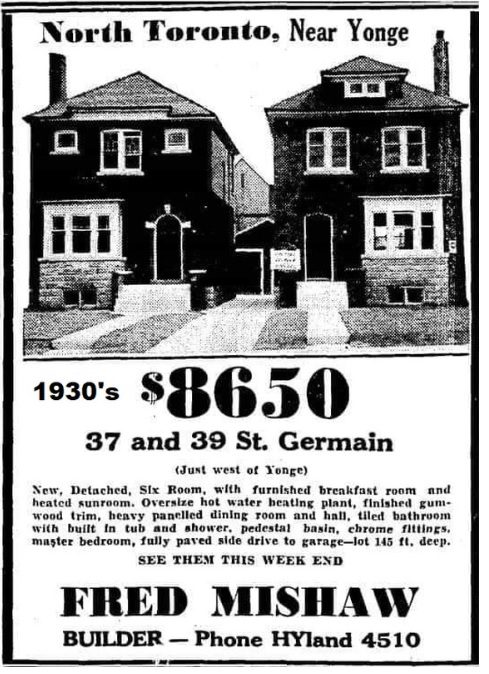
According to Land Registry, 37 St. Germain Avenue was completed in 1933.
That means the advertisement you see above likely represents the first time these houses were offered for sale!
But like the first house we saw on Carey Crescent, I also enjoy the features listed above.
“Oversize hot water heating plant.” I don’t even know what that is.
“Heavy panelled dining room and hall.” What’s heavy about it?
Here’s another ad from the early-1900’s:
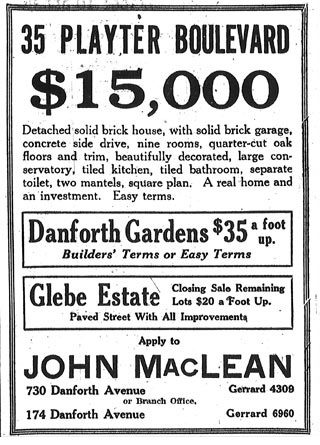
Note that many of the original real estate ads sold “lots by the foot.”
Lot size is important in real estate in 2026, but it’s only part of of the evaluation process. I don’t know if these lots in Danforth Gardens or Glebe Estate were for vacant parcels of land, or for land with houses on them, but it’s good to know that lots in Glebe Estate have “paved streets with all improvements.”
This house was built in 1911, so I wonder if this ad is for the original house? Was $15,000 a lot of money in 1911? I have to think so. This feels like a 1930’s price to me.
As for the house itself, it hasn’t sold since 2000:
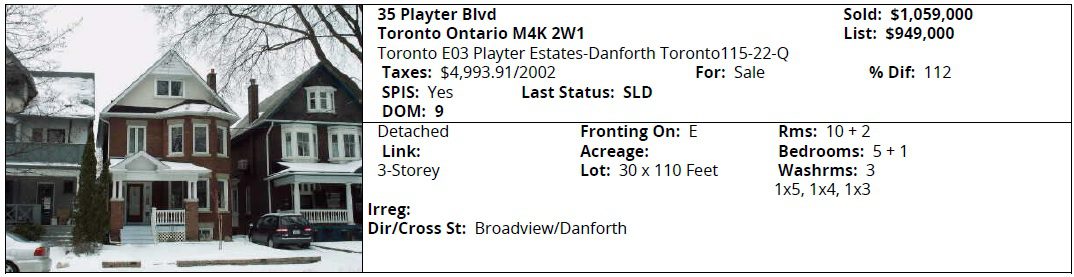
That’s not exactly an eye-popping price at $1,059,000, but this was twenty-six years ago! The average real estate price has more than tripled since then!
Still, it pales in comparison to the $15,000 price tag, regardless.
Let’s move up a few decades.
Here’s an advertisement from 1960:
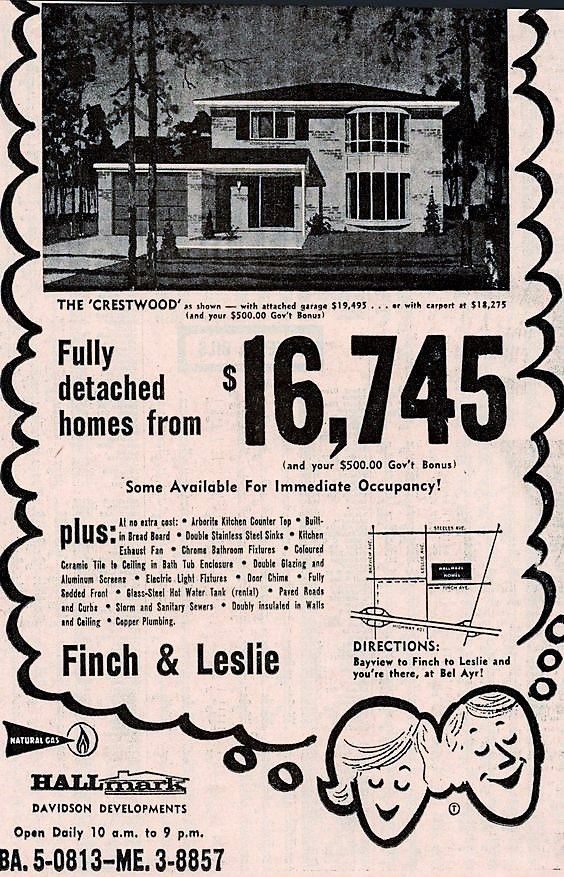
Perhaps some of the more seasoned folks can explain the “$500 government bonus” and how that worked?
Interesting for sure, but not as interesting as the Built-In Bread Board.
Again, can some of the life-veterans explain why one needed this in their home? Was bread so in demand that a detached bread board would not have sufficed?
Then again, was this area so rough that they had to specify the “paved roads and curbs” along with the “storm and sanitary sewers?”
Were there other areas in Toronto without sanitary sewers, where it was like a scene out of Gangs Of New York?
As for the oldest real estate advertisement I could find, it would be this one from 1847:
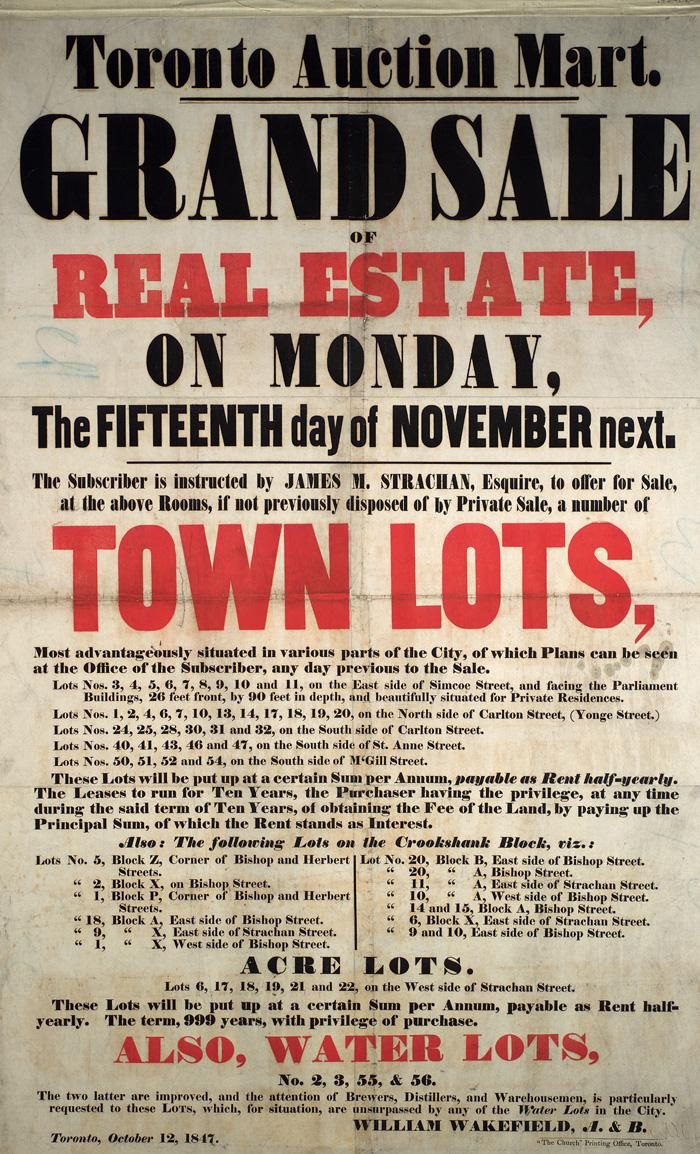
Amazing.
This pre-dates Canada.
Again, I love the verbiage here:
“The fifteenth day of November next.”
Soooo…….that means this November 15th? Are we in agreement here?
Note the fine print at the bottom:
“The term, 999 years, with privilege of purchase.”
Are we talking land leases here? Because if we are, then 1847 land leases that run 999 years are a little out of my area of expertise.
Perhaps this is a “lease to own” situation. The lots are put up at a “certain sum per annum, payable as rent half-yearly.” Then we read, “The term, 999 years, with privilege of purchase.” So maybe it’s like leasing a car, with a buyout option at the end?
I shudder to think which John Smith entered into a contract with the plan to have his descendants buy the land 800 years later.
But the concept of delayed payments was very common as the City of Toronto was built.
Fast-forward to the year 1912, and we see, once again, that very favourable terms were offered to buyers out in Scarboro Bluffs:
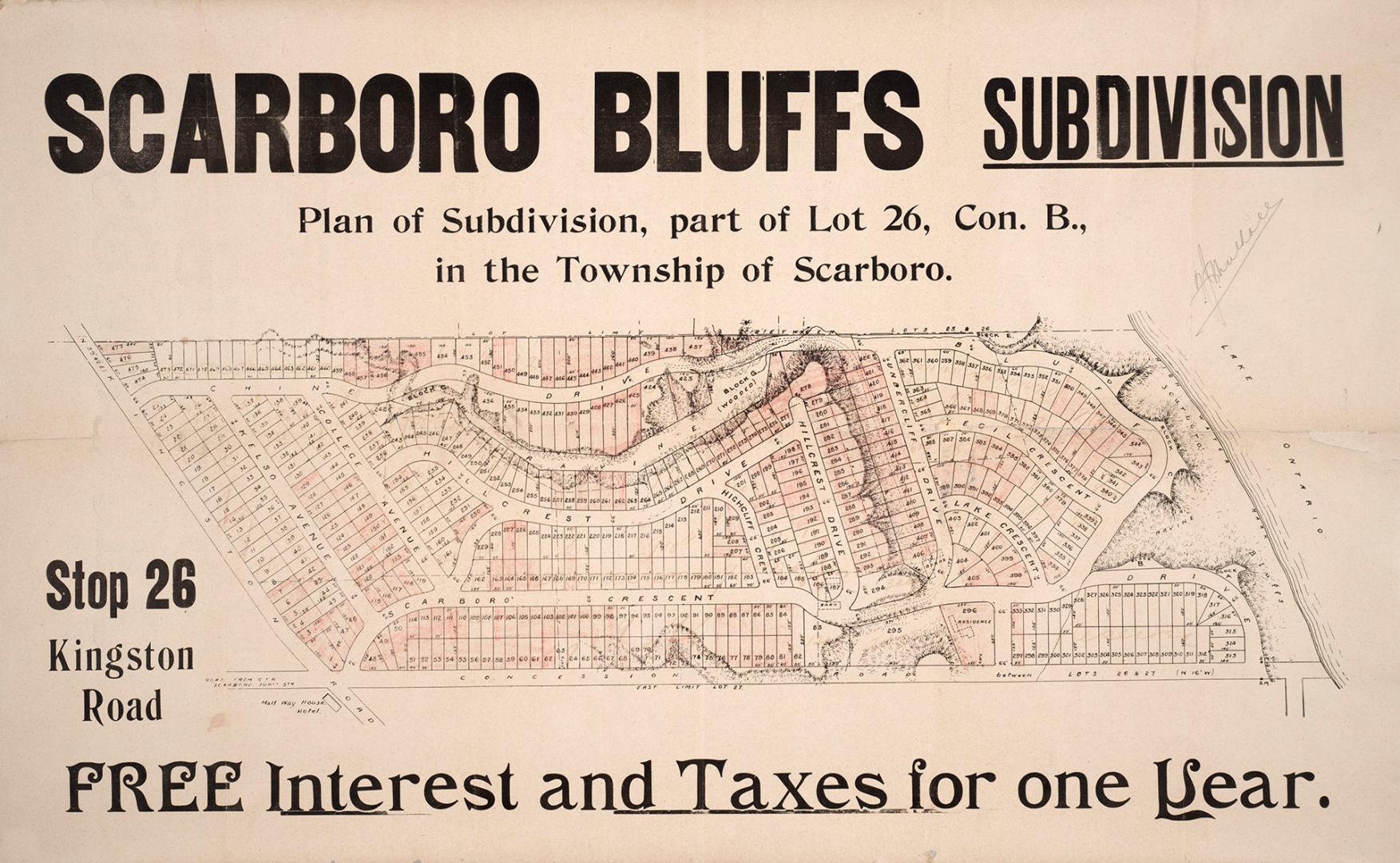
It’s kind of hard to miss.
Free interest and taxes for one year.
Could these folks ever have imagined that more than a century later, developers flogging pre-construction condos would use the same gimmick?
Some offers just stand the test of time, don’t they?
–
I hope you enjoyed today’s post!
If you’ve got any old real estate advertisements, please email them to me at da**********@**************te.com.
City archives are great for this sort of thing, but it’s the newspaper ads, with actual dates, that I like the most. I also love the ads with addresses, like 12 Wilfred Avenue and 35 Playter Boulevard above, since we can compare the initial offering price from yesteryear to the most recent sale price.
Have a great weekend, everybody!



























hoob
at 9:25 am
Awesome post.. I like browsing the historical maps archives for Toronto and seeing how the neighbourhoods change. I can confirm my house was built in 1917 since the hand-drawn maps from 1915 and 1918 show the material change!
Serge
at 9:29 am
$500 that is again government using “taxpayer money” to prompt developers. In their Pearson’s propaganda leaflet, they say: “Tax incentives brought new industries into slow-growth areas, special programs helped increase production of cars and parts, and a $500 bonus for winter-built houses gave new impetus to winter construction and employment.”
One can imagine what is behind it.
Interestingly, in the same leaflet: “A new 5 year program for bringing new life to areas of rural poverty and stagnation was worked out with the provinces.
HELPING PEOPLE The Liberal government led by L. B. Pearson has used better economic growth as the sound basis on which to do more for people.
IMPROVED OPPORTUNITIES FOR YOUNG PEOPLE
More opportunities have been created for Canada’s youth to get the education they need in today’s world through Federal-Provincial programs providing: … Allowances of $10 a month for 16- and 17-year olds who remain at school.”
Thanks!
Another trend: “IMPROVED SECURITY FOR OLDER PEOPLE Older people were given more security with the $10-a-month increases in old age pensions and assistance
to $75”
Wow!
“Starting in 1966, the $75-a-month pension will be paid to persons aged 69 and over; the following year to persons aged 68, and so on until 1970, when the full $75 will be available to everyone aged 65 and over. ”
Those were boomers’ years!
Now we are moving back to 69. Nothing is new under the sun.
Vancouver Keith
at 9:30 pm
My dad bought a house in Victoria in 1961 for $8500. He made $380 as a laboratory assistant for the ministry of forests, so the house was 2x an entry level job income. Times have changed, much for the better but ordinary people owning homes was a huge economic and social stabilizing force in the previous century.
Lynn S
at 4:44 pm
Long time lurker here, but I love old stats.
In 1961, a GREAT salary was $10,000 a year. Most people earned about $5000 on average and spent at least $3000 a year to cover food, shelter etc. Income taxes were at 33%, so $1600.
That left $400 a year, maybe, for *extras*.
Consumer Credit was almost nonexistent.
A different world.